
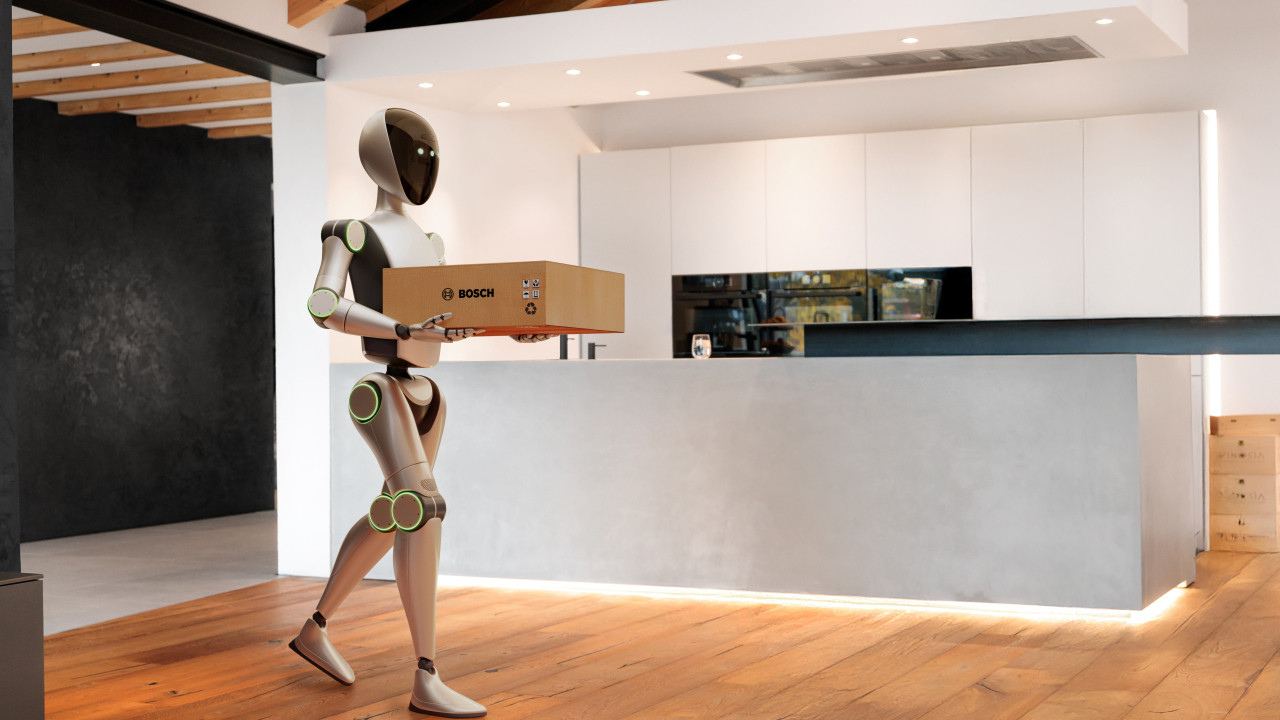
Las Vegas, NV – At the pulsating heart of the robotics revolution and the rapidly expanding world of Extended Reality (XR) lies a silent, yet indispensable technology: MEMS (Micro-Electro-Mechanical Systems) sensors. Much like the complex senses that guide living organisms, these tiny, sophisticated devices serve as the foundational pillar, endowing machines with the crucial ability to perceive and understand their own motion and orientation. This spatial awareness transforms complex algorithms into fluid movements and immersive digital experiences.





Three new high-end sensors for the growth market
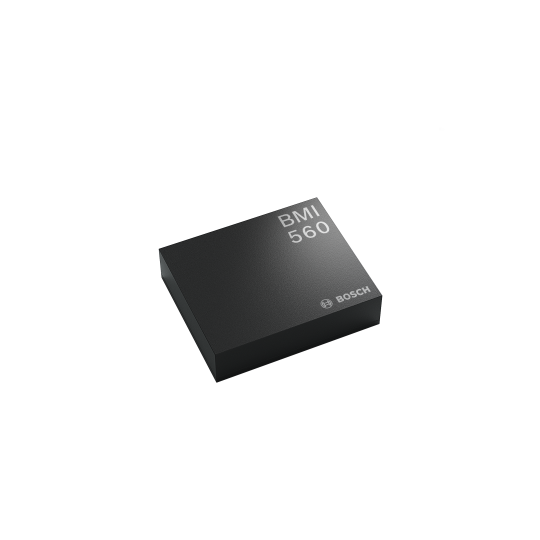
At CES® 2026, Bosch Sensortec introduces the BMI5 platform, a new generation of inertial (acceleration and gyroscope) sensors designed to provide high-precision performance with ultra-low noise to capture every nuance of motion across multiple device classes. Built on a shared hardware foundation and adapted through intelligent software, the platform launches with three variants – BMI560, BMI563 and BMI570. The BMI5 family products are addressing the premium segments of consumer electronics device manufacturers, building the base for the growing MEMS sensor market. According to market research and strategy consulting company Yole Group, this market with Bosch as the market leader, is expected to grow to more than 19.2 billion USD by 2030, with an average compound annual growth rate (CAGR 2024-2030) of 4 percent.* To meet the high-volume serial production demands, the cleanroom area in its own Bosch wafer fab in Reutlingen, Germany was expanded from approximately 35,000 square meters to over 44,000 square meters by the end of 2025.
Specific solutions for diverse applications
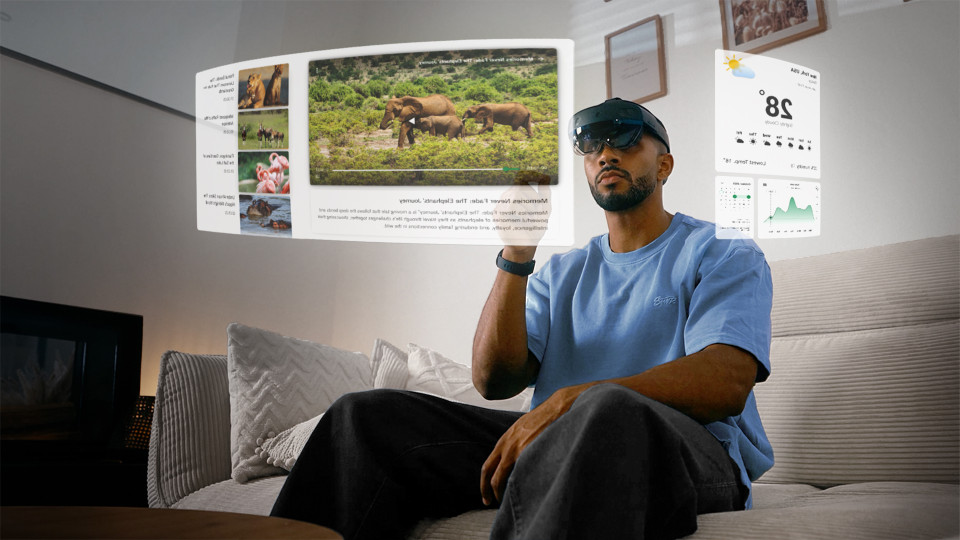
The BMI560 sensor makes virtual and augmented reality experiences feel incredibly real. It precisely tracks head movements with almost no delay, allowing users to interact naturally in 3D environments. Advanced image stabilization helps smartphones and action cameras capture clear, shake-free photos and videos, even on the go.
The BMI563 is handling vibrations and extreme movements, making it ideal for robots that need to navigate precisely or for controllers in virtual reality that track every subtle hand gesture. It helps these devices understand their surroundings and movements with exceptional accuracy. For example, Bosch's new MEMS sensor helps a humanoid robot find the right way, even if the camera lens is covered by an object.
The BMI570 enhances smartwatches and wireless earbuds. Compared to its predecessor, the new platform delivers a doubled measurement range. This enables the detection of an even wider array of movements and gestures, particularly those in dynamic forms. For hearables it provides accurate head-orientation data for immersive 3D audio experiences. This means music or calls can sound like they're coming from a specific direction, reacting to how the user is moving.
Technical AI excellence paired with responsible innovation
An Edge-AI classification engine helps the device stay “always on” by recognizing movement patterns directly inside the sensor. This uses less power, makes reactions faster, and adds smart benefits — like automatic activity detection on a smartwatch without the user needing to interact. Across all variants, the BMI5 platform meets Bosch Sensortec’s highest ecological standards to date, combining technical performance with responsible innovation. This unified architecture enables device makers to streamline cutting-edge and at the same time a sustainable development across product lines. “With the BMI5 platform, we are strengthening the foundation for the next generation of motion-aware devices,” said Stefan Finkbeiner, CEO of Bosch Sensortec. “Our customers benefit from a consistent level of precision, robustness and exceptional performance across all variants - enabling responsive XR systems, reliable robotics and intuitive wearables. The platform combines technical excellence with responsible innovation, reflecting our core Bosch values of quality and sustainability supporting a wide range of applications with a single, scalable architecture. And this was just the beginning. The BMI5 family continues to grow, with more variants already in the pipeline.”
*Source: Status of the MEMS Industry 2025 report, Yole Group.
Contact person for press inquiries:
Constantin Schmauder
Phone: +49 172 7257198
E-mail: constantin.schmauder@bosch-sensortec.com
Mónika Hack
+36 70 510 5516
Bosch has been present in Hungary since 1898 with its products. After its re-establishment as a regional trading company in 1991, Bosch has grown into one of Hungary’s largest foreign industrial employers with currently nine subsidiaries. In fiscal 2024 it had total net sales of 2058 billion forints and consolidated sales to third parties on the Hungarian market of 313 billion forints. The Bosch Group in Hungary employs more than 17,400 associates (as of December 31, 2024). In addition to its manufacturing, commercial and development business, Bosch has a network of sales and service operations that covers the entire country.
The Bosch Group is a leading global supplier of technology and services. It employs roughly 418,000 associates worldwide (as of December 31, 2024). The company generated sales of 90.3 billion euros in 2024. Its operations are divided into four business sectors: Mobility, Industrial Technology, Consumer Goods, and Energy and Building Technology. With its business activities, the company aims to use technology to help shape universal trends such as automation, electrification, digitalization, connectivity, and an orientation to sustainability. In this context, Bosch’s broad diversification across regions and industries strengthens its innovativeness and robustness. Bosch uses its proven expertise in sensor technology, software, and services to offer customers cross-domain solutions from a single source. It also applies its expertise in connectivity and artificial intelligence in order to develop and manufacture user-friendly, sustainable products. With technology that is “Invented for life,” Bosch wants to help improve quality of life and conserve natural resources. The Bosch Group comprises Robert Bosch GmbH and its roughly 490 subsidiary and regional companies in over 60 countries. Including sales and service partners, Bosch’s global manufacturing, engineering, and sales network covers nearly every country in the world. Bosch’s innovative strength is key to the company’s further development. At 136 locations across the globe, Bosch employs some 87,000 associates in research and development
Additional information is available online at www.bosch.hu, iot.boschblog.hu, www.bosch.com, www.iot.bosch.com, www.bosch-press.com, www.twitter.com/BoschPresse