
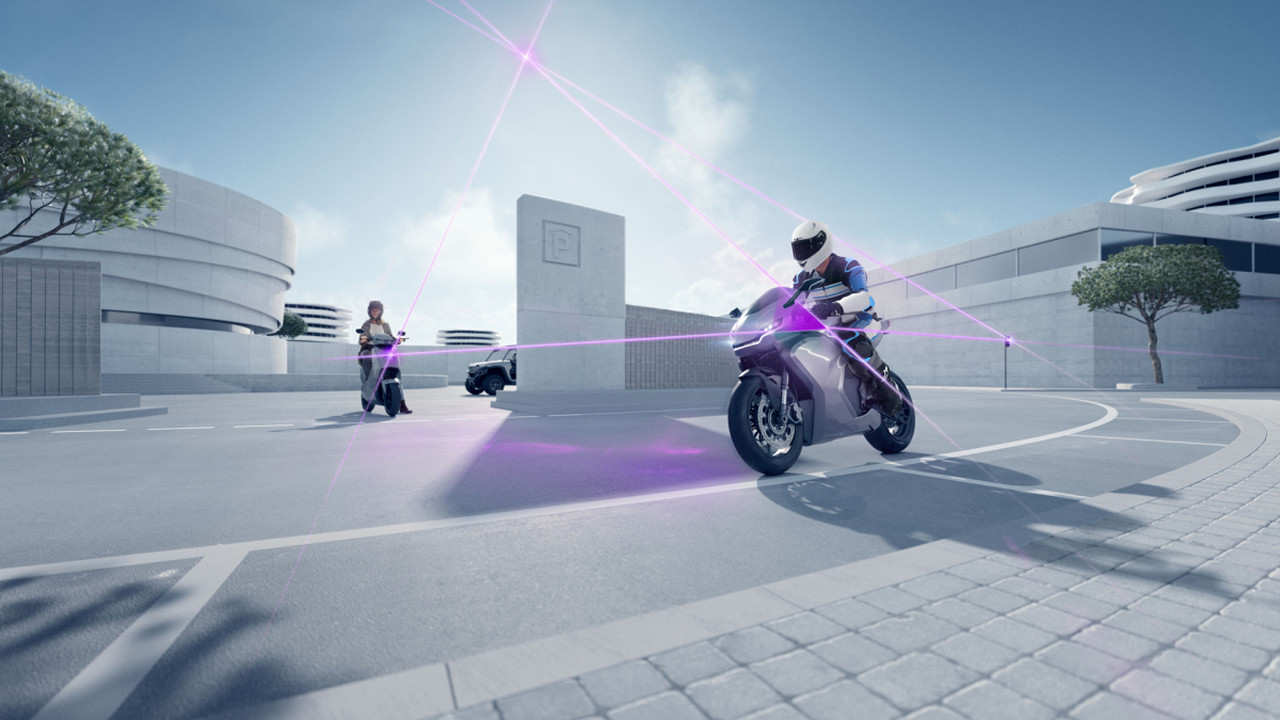
Milan, Italy – The more connected a motorcycle is, the more important its
protection against digital attacks. Bluetooth, Wi-Fi, and cloud connections are
rapidly gaining importance in the two-wheeler segment. With this in mind, and
with a view to protecting vehicle electronics even more effectively, Bosch is
unveiling a new, highly compact generation of its Central Gateway at EICMA
2026. “For Bosch, motorcycle safety has many facets. We’re making them
accessible to all riders and for every vehicle class – from accident prevention
through rider-assistance systems to protecting connected vehicles against
external attacks,” says Geoff Liersch, head of Two-Wheeler and Powersports at
Bosch. The company is introducing this new technology specifically to help
motorcycle manufacturers meet upcoming regulatory requirements: starting in
December 2027, in accordance with UN Regulation R155, all newly developed
two-wheeled vehicles must be secured against cyberattacks as complete
systems; starting in June 2029, this requirement will also apply to all new
registrations.

The Central Gateway serves as a central interface to control incoming data
traffic. At the trade fair, Bosch is showcasing the system in two performance
classes: Light and Base. The Central Gateway Light is the company’s first highly
compact 16-pin version, designed for vehicles with limited installation space,
which can be integrated into existing electronic architectures with minimal effort.
For premium models, the 39-pin Central Gateway Base provides additional
flexibility through integrated vehicle body control functions. In addition, Bosch
provides its customers a high-performance Central Gateway. The 99-pin Central
Gateway High is designed for future generations of vehicles with highly
integrated electronic architecture. Security chips built directly into the respective
control units – such as the ABS or the ECU – serve as an additional layer of
protection inside the vehicle. The components are designed with cybersecurity in
mind right from the factory, making it easier for vehicle manufacturers to obtain
type approval in accordance with international standards. They ensure that, even
in the event of external access, only verified signals reach the network. In
addition, Bosch offers security services throughout the vehicle’s lifecycle such as
fleet monitoring, proactive attack and intrusion detection, and vulnerability
tracking during operation. “With our technology, manufacturers can meet the new
global requirements while protecting riders against cyberattacks on vehicle
components,” explains Geoff Liersch.
Bosch presents the mobility technology of tomorrow
In addition to cybersecurity, Bosch is also continuing to advance safety and
convenience on the road. When it comes to Radar-based Assistance Systems
(ARAS Advanced Rider Assistance Systems), Bosch is focusing on proven
technologies at EICMA: with unique features, Bosch ensures safe riding in
groups or in heavy traffic. The new Triumph Tiger 1200, for example, features
Bosch front and rear radar sensors to increase safety and comfort, enabling a
comprehensive range of Advanced Rider Assistance Systems. This integrated
package combines functions such as Adaptive Cruise Control (ACC), Group Ride
Assist (GRA), and Riding Distance Assist (RDA) to increase safety and
convenience while riding. Forward Collision Warning (FCW) and Blind Spot
Detection (BSD) provide additional assistance by improving the rider’s
awareness in all traffic situations.
The display also plays a central role as the human-machine interface: Bosch’s
TFT Connect System is a new generation of high-resolution instrument clusters
that can be customized and connected to a smartphone. These can display not
only important functions but also content such as navigation or music directly on
the screen. In addition, the displays serve as a digital interface for activating
functions at a later time (on-demand functions). The 7-inch version of the display
is celebrating an important milestone at EICMA: the start of production in the new
Triumph Tiger 1200 model.
Turning to electrification, Bosch offers a broad portfolio of powertrain systems.
For smaller two-wheeled vehicles, the electric motor and inverter can be
combined into a single integrated 6 kW electric drive, which makes integration
easier for manufacturers. Compact electric in-hub motors provide emissions-free
propulsion for e-scooters. Meanwhile, the Vehicle Control Unit (eVCU) is
responsible for coordinating the entire electric powertrain. Another key focus is
on a system solution for the Digital Battery Passport, which becomes a legal
requirement in February 2027: this Bosch software provides motorcycle
manufacturers with solutions for securely managing the required battery data
throughout their vehicles’ lifecycle.
Mónika Hack
+36 70 510 5516
Mobility is the largest Bosch Group business sector. It generated sales of 55,8 billion euros in 2025, and thus contributed around 61 percent of total sales. This makes the Bosch Group one of the leading mobility suppliers of technology and services. For its customers, the outcome is integrated mobility solutions. The business sector’s main areas of activity are electrification, software and services, semiconductors and sensors, vehicle computers, advanced driver assistance systems, systems for vehicle dynamics control, repair-shop concepts, as well as technology and services for the automotive aftermarket and fleets. Bosch is synonymous with important automotive innovations, such as electronic engine
management, the ESP anti-skid system, and common-rail diesel technology.
The Bosch Group is a leading global supplier of technology and services. It employs roughly 413,000 associates worldwide (as of December 31, 2025). The company generated sales of 91 billion euros in 2025. Its operations are divided into four business sectors: Mobility, Industrial Technology, Consumer Goods, and Energy and Building Technology. With its business activities, the company aims to use technology to help shape universal trends such as automation, digitalization, electrification, and artificial intelligence. In this context, Bosch’s broad diversification across regions and industries strengthens its innovativeness
and robustness. Bosch uses its proven expertise in hardware, software, and services to offer customers cross-domain solutions from a single source. It also applies its expertise in connectivity and artificial intelligence in order to develop and manufacture intelligent and user-friendly products. With technology that is “Invented for life,” Bosch wants to help improve quality of life. The Bosch Group comprises Robert Bosch GmbH and its roughly 500 subsidiary and regional companies in over 60 countries. Including sales and service partners, Bosch’s global manufacturing, engineering, and sales network covers nearly every
country in the world. Bosch’s innovative strength is key to the company’s further development. Bosch employs some 82,000 associates in research and development.
Additional information is available online at www.bosch-press.com, www.bosch-mobility.com, www.bosch.com.