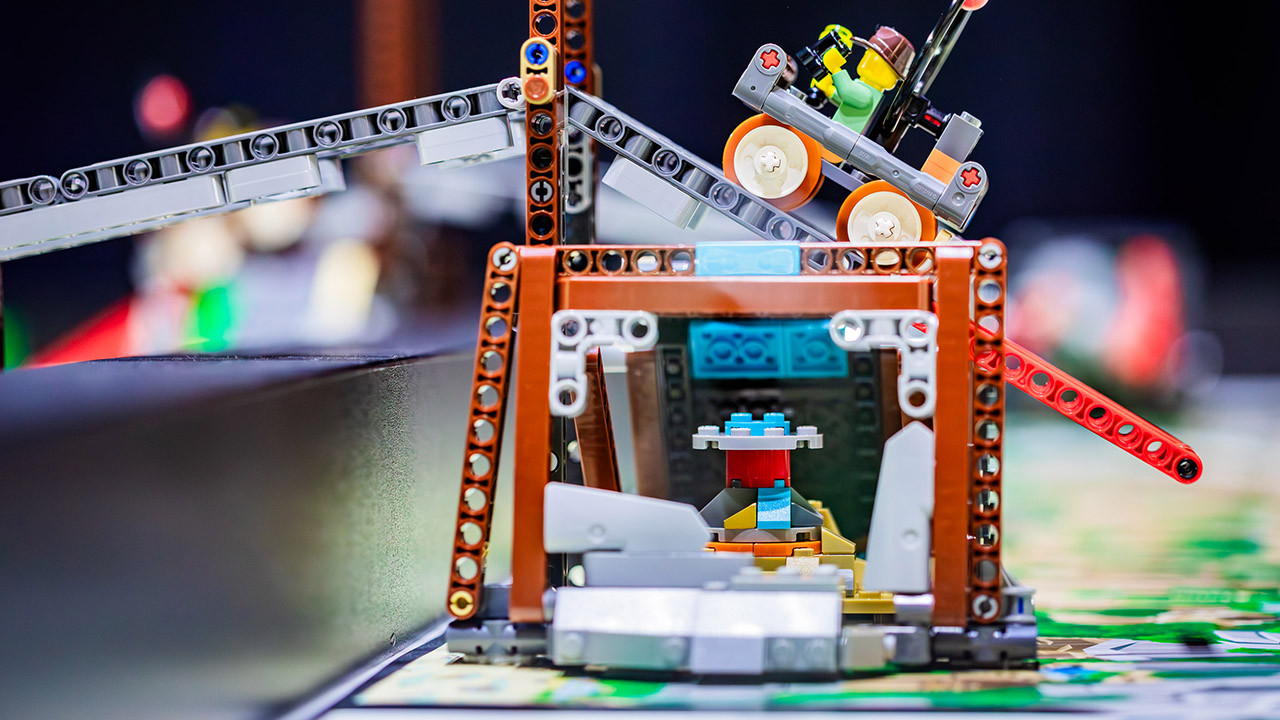
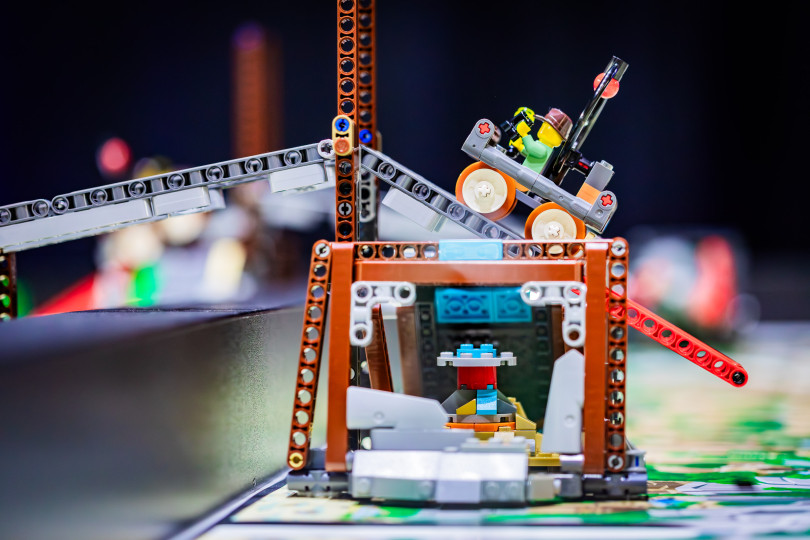
The regional finals of the FIRST LEGO League Explore and Challenge, as well as the Miskolc league round of the First Tech Challenge, were held in Miskolc on February 6th and 7th. A total of 38 teams and more than 300 students participated in the competitions. The two-day event was organized by Robert Bosch Power Tool Kft. in Miskolc, and it was hosted by the University of Miskolc. The goal of the technology competitions was for young people to develop their engineering, programming, and problem-solving skills in a playful yet professionally challenging way, and to experience the importance of teamwork. “It is extremely important for Bosch to spark interest in technical and natural science careers at a young age. Competitions like this not only give students knowledge, but also self-confidence, team experience, and a vision for the future. These young people can be the engineers and innovators of the future," said Tim Krause, general manager of Robert Bosch Power Tool Kft. in Miskolc. The main topic of this year's competition season was archaeology. Teams had to leverage their STEM (science, technology, engineering, and mathematics) and collaboration skills to find answers to how learning about the past can help build a better future. During the competitions, the students worked on innovation projects and solved tasks with robots they built and programmed themselves.


Technology challenges tailored to age groups
In the FIRST LEGO League Explore category, which addressed children between the ages of 6 and 10, the emphasis was on cooperation, collaborative learning, and communication. In the FIRST LEGO League Challenge, a competition for 9-16 year olds, the jury awarded prizes for the robot game, design, and innovative ideas of the built robots based on professional criteria. At the First Tech Challenge, held for the second time in Hungary, teams of 15-18 year old students competed against each other with their self-designed, built, and programmed robots in various course tasks.
In the competitions, the jury evaluated not only the completion of the tasks but also the quality of teamwork, creativity, and problem-solving. The majority of the nearly 40-member professional jury and team of judges consisted of Bosch employees, who, with their experience in engineering, IT, and development, helped ensure the professional execution of the competitions and the evaluation of the teams. 9 teams started in the FIRST LEGO League Explore category, and 21 teams in the FIRST LEGO League Challenge. The field of competitors was mainly from Miskolc and Borsod-Abaúj-Zemplén county, but at the First Tech Challenge league round, competitors also arrived from Budapest, Debrecen, and Győr.
Complex support for preparation
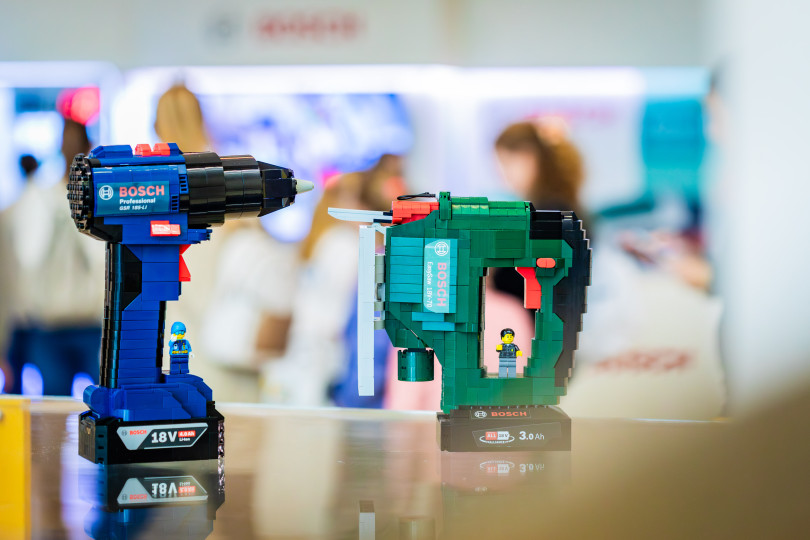
The Bosch power tool pant in Miskolc undertook the organization of the regional final and the league round, and also supported 17 schools and 28 regional teams. The company covered the registration fees, provided the necessary LEGO sets for participation, and supplied educational robots to several institutions to aid in their preparation. In addition, it contributed financial support to enable robotics clubs to operate in schools, thereby supporting the next generation of competitors. In cooperation with the HelloWorld Association, a workshop was organized for the preparing teachers at the Bosch plant in Miskolc, where competitors and their supervising teachers could get acquainted with the professional background and methodology of the various competition events. With their innovation projects, the teams can apply for professional or financial support from Bosch Hungary to implement their ideas, allowing the best concepts to be further developed after the competition.
Five teams advanced to the final
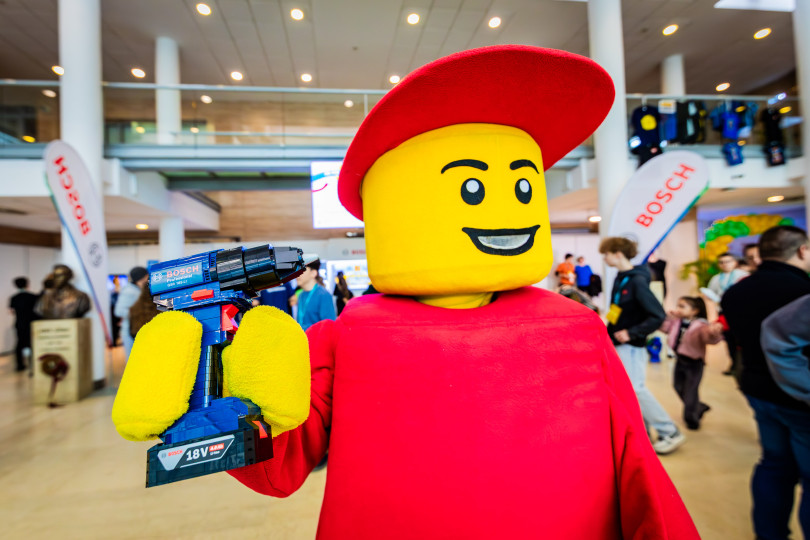
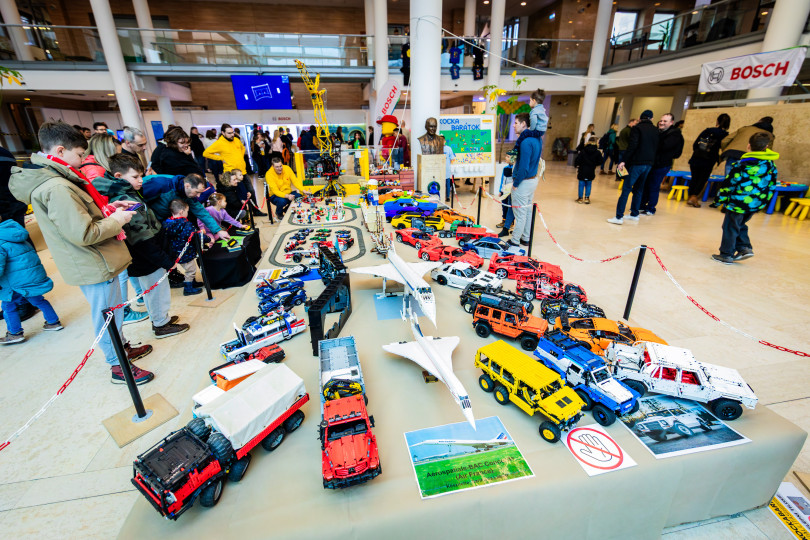
From the Miskolc competition, the Progress team of the Földes Ferenc Gimnázium in Miskolc, the Herobic team of the Alsózsolcai Herman Ottó Általános Iskola és Alapfokú Művészeti Iskola, the Tárkányi Lego Builders team from the Felsőtárkányi Általános Iskola és Alapfokú Művészeti Iskola, the Unimate team from the miskolci SZC Bláthy Ottó Villamosipari Technikum, as well as the S-TEAM of the Földes Ferenc Gimnázium in Miskolc and the Fényi Gyula Jezsuita Gimnázium, also in Miskolc, qualified for the national final in Hungary, which will be held in Budapest at the end of February. The Saturday round of the Miskolc regional final could also be followed on site by those interested, visitors were welcomed with a Bosch quiz, power tool foosball and minigolf, robotics demonstrations, playful science tasks, LEGO building programs and an exhibition, as well as a huge sea of LEGO bricks for building.
Mónika Hack
+36 70 510 5516
Bosch has been present in Hungary since 1898 with its products. After its re-establishment as a regional trading company in 1991, Bosch has grown into one of Hungary’s largest foreign industrial employers with currently nine subsidiaries. In fiscal 2024 it had total net sales of 2058 billion forints and consolidated sales to third parties on the Hungarian market of 313 billion forints. The Bosch Group in Hungary employs more than 17,400 associates (as of December 31, 2024). In addition to its manufacturing, commercial and development business, Bosch has a network of sales and service operations that covers the entire country.
The Bosch Group is a leading global supplier of technology and services. According to preliminary figures, it employs roughly 412,000 associates worldwide (as of December 31, 2025). The company generated sales of 91 billion euros in 2025. Its operations are divided into four business sectors: Mobility, Industrial Technology, Consumer Goods, and Energy and Building Technology. With its business activities, the company aims to use technology to help shape universal trends such as automation, electrification, digitalization, connectivity, and an orientation to sustainability. In this context, Bosch’s broad diversification across regions and industries strengthens its innovativeness and robustness. Bosch uses its proven expertise in sensor technology, software, and services to offer customers cross-domain solutions from a single source. It also applies its expertise in connectivity and artificial intelligence in order to develop and manufacture user-friendly, sustainable products. With technology that is “Invented for life,” Bosch wants to help improve quality of life and conserve natural resources. The Bosch Group comprises Robert Bosch GmbH and its roughly 490 subsidiary and regional companies in over 60 countries. Including sales and service partners, Bosch’s global manufacturing, engineering, and sales network covers nearly every country in the world. Bosch’s innovative strength is key to the company’s further development. At 136 locations across the globe, Bosch employs some 82,000 associates in research and development.
The company was set up in Stuttgart in 1886 by Robert Bosch (1861–1942) as “Workshop for Precision Mechanics and Electrical Engineering.” The special ownership structure of Robert Bosch GmbH guarantees the entrepreneurial freedom of the Bosch Group, making it possible for the company to plan over the long term and to undertake significant upfront investments in the safeguarding of its future. Ninety-four percent of the share capital of Robert Bosch GmbH is held by Robert Bosch Stiftung GmbH, a limited liability company with a charitable purpose. The remaining shares are held by Robert Bosch GmbH and by a corporation owned by the Bosch family. The majority of voting rights are held by Robert Bosch Industrietreuhand KG. It is entrusted with the task of safeguarding the company’s long-term existence and in particular its financial independence – in line with the mission handed down in the will of the company’s founder, Robert Bosch.
Additional information is available online at www.bosch.hu, iot.boschblog.hu, www.bosch.com, www.iot.bosch.com, www.bosch-press.com, www.twitter.com/BoschPresse