
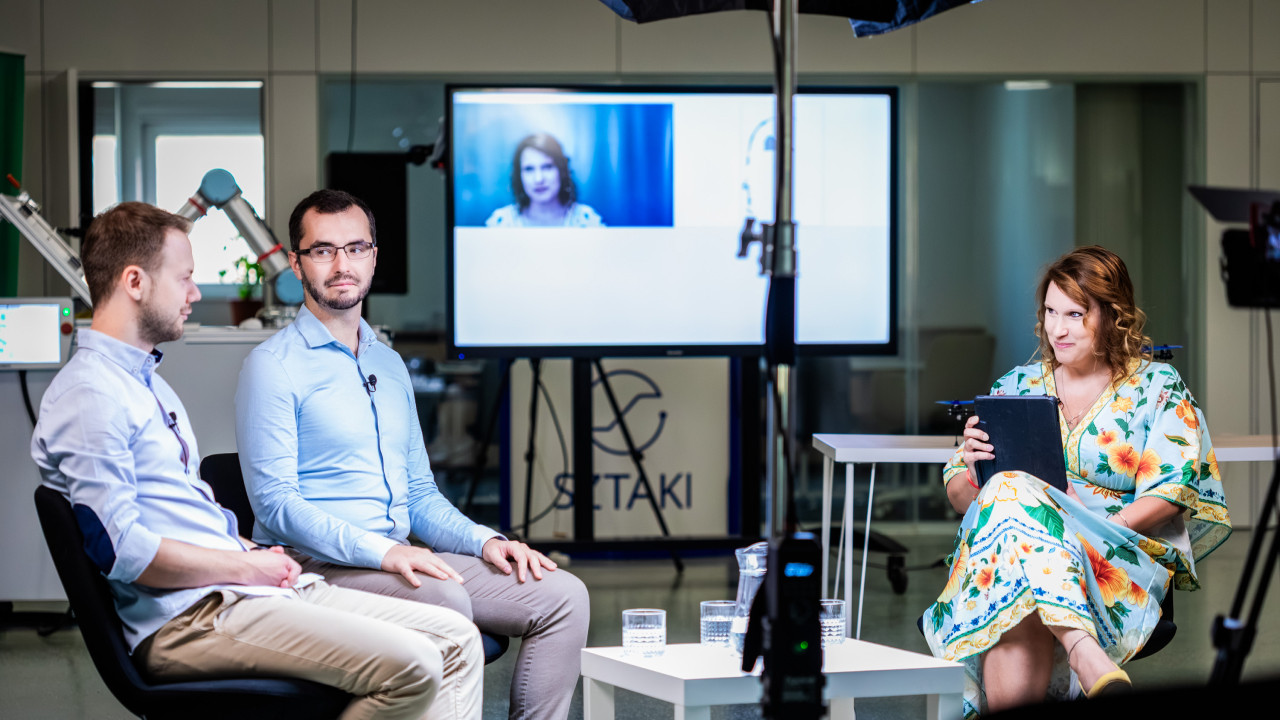
Budapest – A system based on machine vision needs only a few seconds to recognize our face, track our movements, and draw conclusions about us based on our expressions or behavior. While we are generally aware that we might be recorded in public spaces, we know far less about what the algorithm looks for in the image, what data it generates, and how that information is used. Meanwhile, artificial intelligence is now capable of modifying and generating visual content, making it increasingly difficult to determine whether footage seen online reflects reality. In the latest episode of the Bosch Hungary Podcast, experts discussed the possibilities and risks of machine vision.
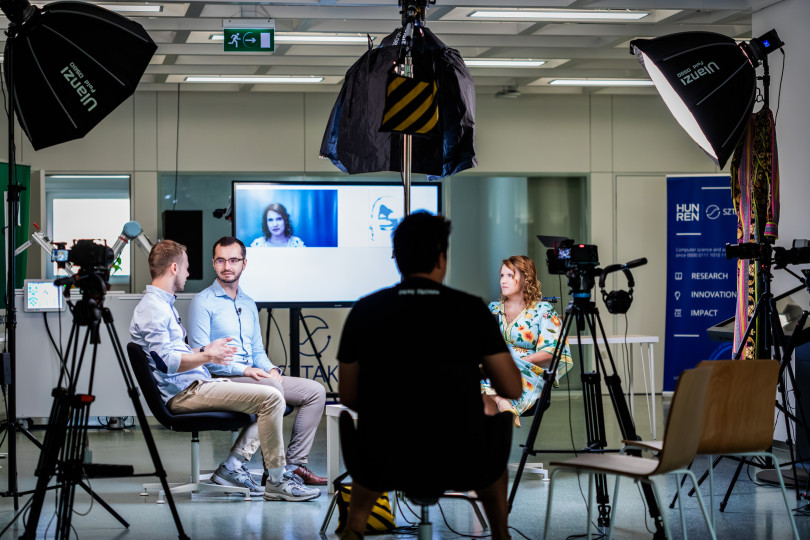
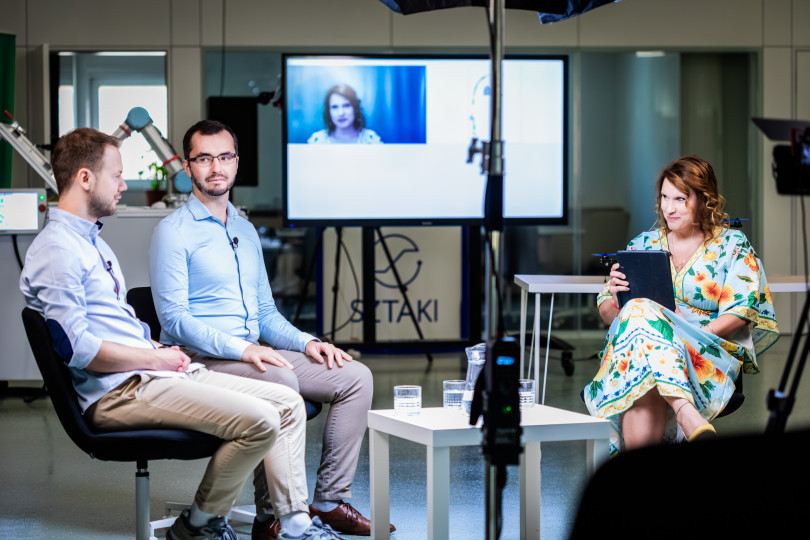
Artificial intelligence can fill in missing details in a photo and generate realistic faces, but it can also create deceptively convincing videos. According to Márk Pető, senior software developer and machine learning engineer at Robert Bosch Kft., we now need to rely on artificial intelligence itself to detect increasingly convincing faked content, also known as deepfakes. Tamás Cserteg, research associate at the HUN-REN SZTAKI Research Laboratory on Engineering & Management Intelligence, believes that it has become particularly important to be able to determine whether we are viewing content that has been modified or created using artificial intelligence.



A recording reveals more data about us than we might think
Cameras are installed in phones, cars, modern household appliances and public spaces. While we usually notice them, we see almost nothing of the background analysis. Yet a wealth of information can be obtained from the same few seconds of footage. The car’s system can detect the driver’s fatigue based on changes in the face and gaze. Cameras in a stadium can continuously track the position of the players, helping to determine offsides with an accuracy of up to ten centimeters. A home security camera detects movement and then notifies the owner. But today, there are even phones that can determine whether we are looking at the screen while lying down or sitting up based on the position of our face.
“We generally know that we are being recorded, but we do not know what information the algorithm is looking for in the footage and what it can determine from it. This is not always clear even to experts,” said Márk Pető. The placement of the cameras alone does not reveal what they are used for: the same image can be used to track movement, identify a face, or detect unusual behavior. The power of machine vision therefore lies in its ability to process highly detailed data from even an ordinary recording.
Machines can recognize movement, but not the reason behind it
In some image recognition tests, machines already make far fewer mistakes than humans. They learn from large quantities of images, so they can recognize recurring patterns even without predefined rules. However, this advantage always applies only to a precisely defined task. For example, an algorithm can easily recognize when someone is running on the street, but it has much more difficulty determining why they are doing it: are they exercising, trying to catch the tram, or running away from something? Humans rely on their surroundings, past experiences and subtle cues of the context to interpret a situation, but machines have to learn all these separately.
“We can already build extremely accurate systems for specific tasks. However, the advantage of humans still lies in their general knowledge. If we give an apple to someone anywhere in the world, they will most likely recognize it and know how to hold it. Machines are still far from having this broad range of knowledge,” said Tamás Cserteg. Machines are becoming increasingly accurate in describing what they see in an image, but understanding what is actually happening remains a much more difficult and complex task for them.
This precision is the advantage on the production line
On the production line, the machine does not need to understand a part’s role. It is enough for it to accurately recognize what the correct part looks like every time and to immediately signal any deviation. Machine vision and machine learning are used in several areas of Bosch’s manufacturing processes. The quality control system learns the characteristics of the correct product from images and then filters out items that differ from them. More advanced solutions can even identify the type of defect. The system can also signal when it finds a deviation that it has not been shown previously. It recognizes that the inspected part differs from the correct sample and further analysis can help uncover the exact cause of the defect.
In numerous parts of the world, there are so-called “dark factories” that operate with fully automated production lines. These facilities do not require illuminated halls. Cameras receive light only when and where they need it to inspect a product, while other systems use radars, thermal cameras or ultrasonic sensors. An industrial camera works quickly, does not get tired, and inspects products with the same level of attention at the end of the shift as at the beginning. Regardless, the operation of these systems is supervised by specialists.
We can now even see what the camera did not capture
Today, the final photo can contain details that were not even there when the original photo was taken. If we remove an object or an entire section of the image, artificial intelligence can fill in the empty space based on the surrounding area. The end result can look so realistic that it is hard to tell which detail was created by AI. Moon photos taken with smartphones are good examples of how blurred the line can be between image enhancement and the creation of new details. Some devices recognize the celestial body and then automatically sharpen and enhance the image. Looking at the final result, it is hard to tell what comes from the camera’s sensor and what was added by image processing.
While fixing a poorly taken family photo is harmless, a fake video of a public figure can cause serious damage. The development of deepfakes has reached a level where the human eye is often not enough to recognize manipulation. “We need to use AI against AI, because an algorithm can spot signs of manipulation more easily than a human,” said the senior software developer and machine learning engineer at Robert Bosch Kft. While the algorithms can determine more and more about us based on a recording, it is becoming increasingly difficult for us to determine how much of the recording reflects reality.
Without transparency, it will be difficult to trust machine vision
The experts agreed that acceptance of this technology may depend on whether people are given clear information about the purpose behind the analysis of the recordings, what data is extracted from them, and who has access to the result. A long privacy policy alone is not enough. There need to be safeguards in place to ensure that this data is not misused.
Bosch Hungary Podcast: technology in plain language
The Bosch Hungary Podcast deals with the most current issues in innovation and R&D, seeks to provide clear answers to the most pressing questions about the technology of the future with the help of expert guests. If you are interested in learning more about what kinds of information cameras can collect about us, how computer vision is used in manufacturing, and why artificial intelligence may be needed to detect AI-generated fakes, you can listen to the answers and even watch them on the Bosch Hungary YouTube, Spotify, Apple Podcasts and Simplecast podcast channels.
Zita Hella Varga
Phone: +36 70 667-6374
Bosch has been present in Hungary since 1898 with its products. After its re-establishment as a regional trading company in 1991, Bosch has grown into one of Hungary’s largest foreign industrial employers with currently ten subsidiaries. In fiscal 2025 it had total net sales of 1.926 billion forints and consolidated sales to third parties on the Hungarian market of 303 billion forints. The Bosch Group in Hungary employs around 16,800 associates (as of December 31, 2025). In addition to its manufacturing, commercial and development business, Bosch has a network of sales and service operations that covers the entire country.
The Bosch Group is a leading global supplier of technology and services. It employs roughly 413,000 associates worldwide (as of December 31, 2025). The company generated
sales of 91 billion euros in 2025. Its operations are divided into four business sectors: Mobility, Industrial Technology, Consumer Goods, and Energy and Building Technology. With its business activities, the company aims to use technology to help shape universal trends such as automation, digitalization, electrification, and artificial intelligence. In this context, Bosch’s broad diversification across regions and industries strengthens its innovativeness and robustness. Bosch uses its proven expertise in hardware, software, and services to offer customers cross-domain solutions from a single source. It also applies its expertise in connectivity and artificial intelligence in order to develop and manufacture intelligent, user-friendly, and sustainable products. With technology that is “Invented for life,” Bosch wants to help improve quality of life and conserve natural resources. The Bosch Group comprises Robert Bosch GmbH and its roughly 500 subsidiary and regional companies in over 60 countries. Including sales and service partners, Bosch’s global manufacturing, engineering, and sales network covers nearly every country in the world. Bosch’s innovative strength is key to the company’s further development. Bosch employs some 82,000 associates in research and development.
The company was set up in Stuttgart in 1886 by Robert Bosch (1861-1942) as “Workshop for Precision Mechanics and Electrical Engineering.” The special ownership structure of Robert Bosch GmbH guarantees the entrepreneurial freedom of the Bosch Group, making it possible for the company to plan over the long term and to undertake significant upfront investments in the safeguarding of its future. Ninety-four percent of the share capital of Robert Bosch GmbH is held by Robert Bosch Stiftung GmbH, a limited liability company with a charitable purpose. The remaining shares are held by Robert Bosch GmbH and by a company owned by the Bosch family. The majority of voting rights are held by Robert Bosch Industrietreuhand KG. It is entrusted with the task of safeguarding the company’s long-term existence and in particular its financial independence – in line with the mission handed down in the will of the company’s founder, Robert Bosch.
Additional information is available online at www.bosch.hu, iot.boschblog.hu, www.bosch.com, www.iot.bosch.com, www.bosch-press.com.