
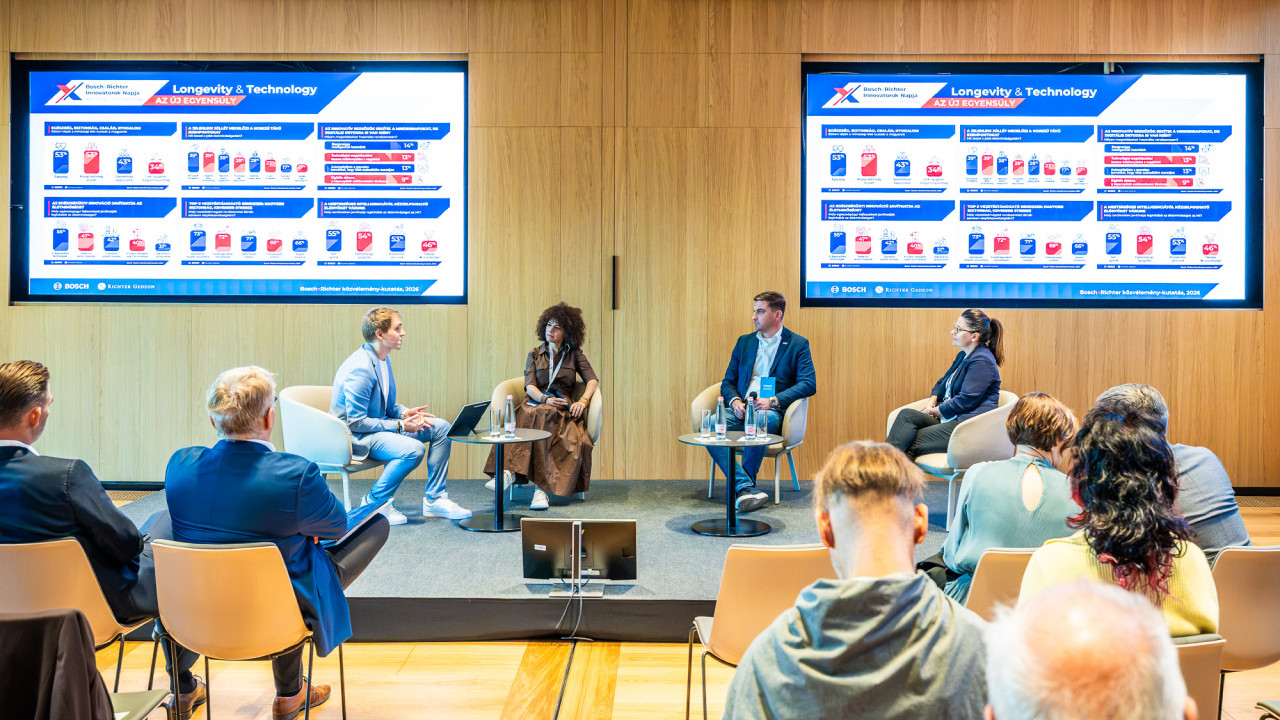
Budapest, Hungary – Many have long sought the secret to longevity, to a long and healthy life. However, the joint 2026 study by the Bosch Group in Hungary and Gedeon Richter Plc. went even further: the two innovative Hungarian corporations examined how we can lead not only longer, but also fuller and happier lives. How can innovation contribute to a higher quality of daily life and help us live with less stress, greater security, and more free time? How can biotechnological and technical developments and innovations improve our lives? Can progress be too fast, and what advancements might artificial intelligence bring? The results of the representative public opinion survey of the Hungarian population aged 16 and older were presented at the BoschxRichter Innovators’ Day on September 23, 2026.
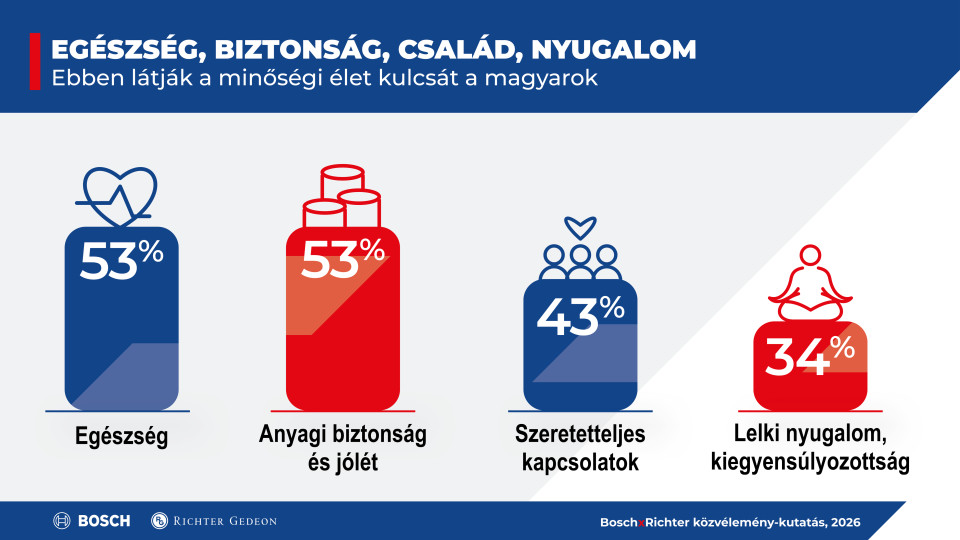


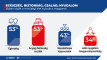
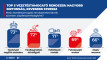
“As long as there is health, money, family and friendship!” – this is how Hungarians view the key to a good quality of life
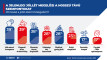
The majority of respondents cited health (53%), financial stability (53%), and loving relationships with family and friends (43%) as the most important factors determining quality of life. Among the factors that undermine and hold back quality of life, respondents most frequently cited financial difficulties (52%), illness (40%), and stress, tension and uncertainty as psychological factors (46%). For many, a lack of time and limited free time (27%), fear of loneliness and isolation (18%), and overload at work or school (16%) also represent challenges to be overcome.
Quality of life in the short and long term: people do a lot for the present, but less for the future
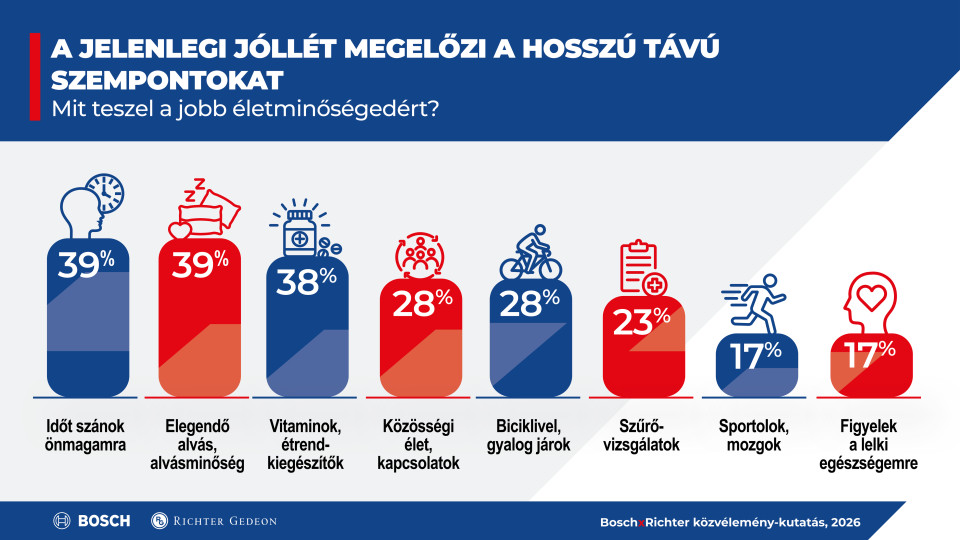
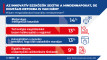
The joint study by Bosch and Richter examined what Hungarians do to improve their present and future quality of life. The responses clearly show that the majority focuses primarily on enjoying the present, while long-term considerations are less of a priority. Most people try to get the most out of their quality of life by making time for themselves and the things that matter to them (39%), striving for sufficient and proper sleep (39%), and taking vitamins and dietary supplements (38%).
However, fewer people actively take steps for their long-term health: on average, barely a quarter of respondents (23%) attend health screenings and even in the oldest age group, this figure is only 33%. Even fewer people exercise regularly or play sports outdoors (17%), but fortunately, a larger number of people walk or bike whenever possible (28%). Among the psychological factors of happiness, the most common is having an active social life and maintaining family and friendship relationships (28%), while far fewer people pay attention specifically to their emotional health (17%).
Technology offers an easier life and more free time, but sometimes a digital detox is necessary
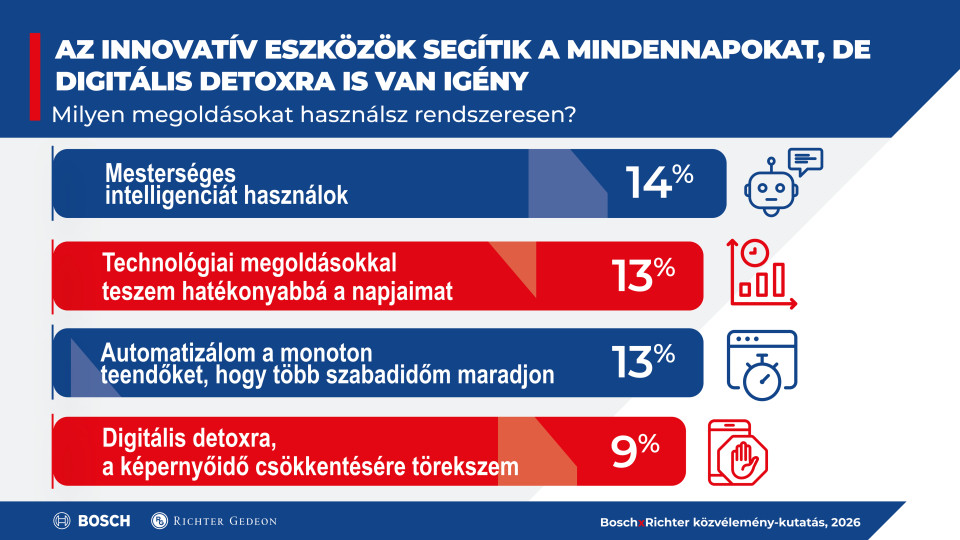
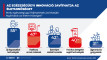
The results of the research show that technology plays a key role in shaping quality of life, but it takes time for it to become widespread. In Hungary, one in seven people already uses technology to make their daily lives more efficient (13%), automate monotonous tasks (13%), or regularly use artificial intelligence (14%). At the same time, as technological solutions become part of everyday life, there is a growing demand to reduce screen time and engage in mental cleansing, or digital detox (9%).
Rapid technological progress does not cause stress even for older people
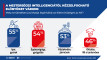
Overall, a significant majority (48%) of the Hungarian population views the impact of technological solutions on our lives positively, believing that innovation clearly contributes to improving quality of life. Only one-fifth of respondents believe that technology makes people’s lives worse.
The research also examined the validity of the common opinion that “too fast” technological change, such as the rise of artificial intelligence, is a stress factor that can undermine people’s quality of life. The results of the Bosch and Richter research show exactly the opposite: only a minimal proportion (7%) of respondents cited the rapid pace of technological development as a problem – the number is even lower among young people, and not much higher among older adults.
Innovative healthcare: from remote medical diagnostics to next-generation medicines and wearable digital devices.
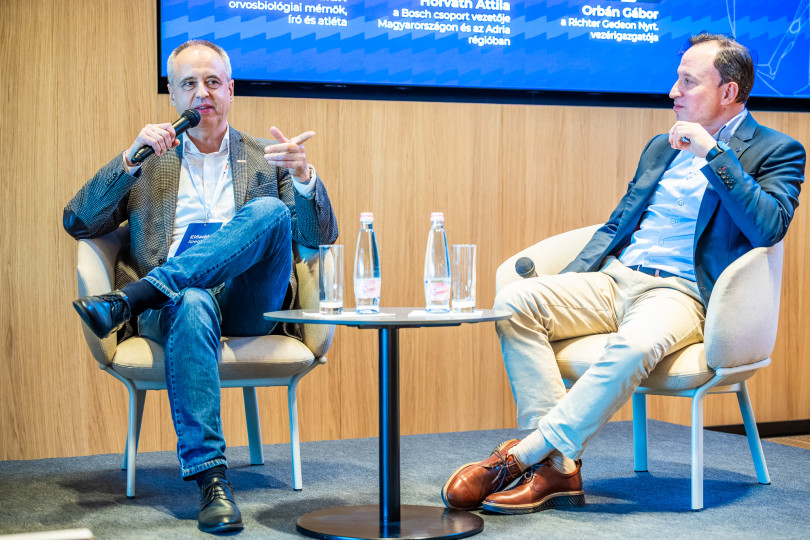
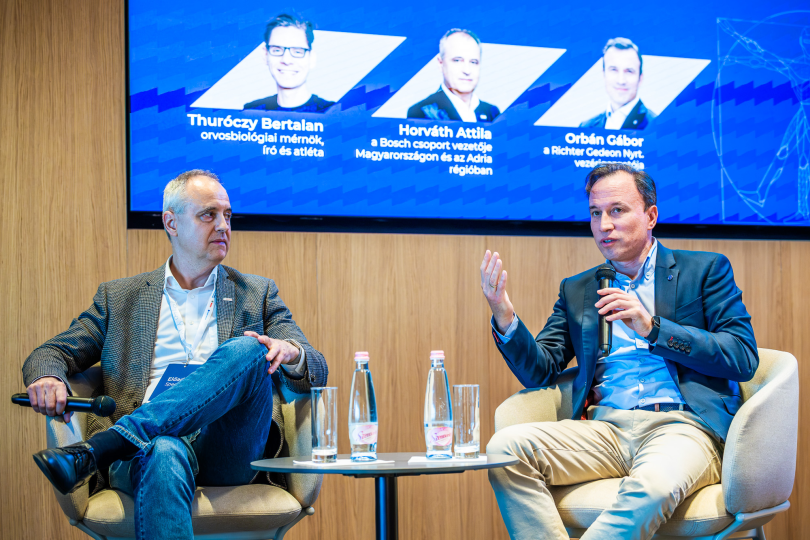
Technological progress is becoming increasingly dynamic in the field of healthcare as well. Some developments yield rapid, direct results, while others represent important milestones in a much broader process. “The significance of healthcare and biotechnology innovations is not necessarily defined by their popularity, but it is worth paying attention to the public reception of these various developments. It is important for us to understand the public’s perspective on which healthcare innovations can contribute most to improving the quality of life for us all,” noted Gábor Orbán, CEO of Gedeon Richter Plc.
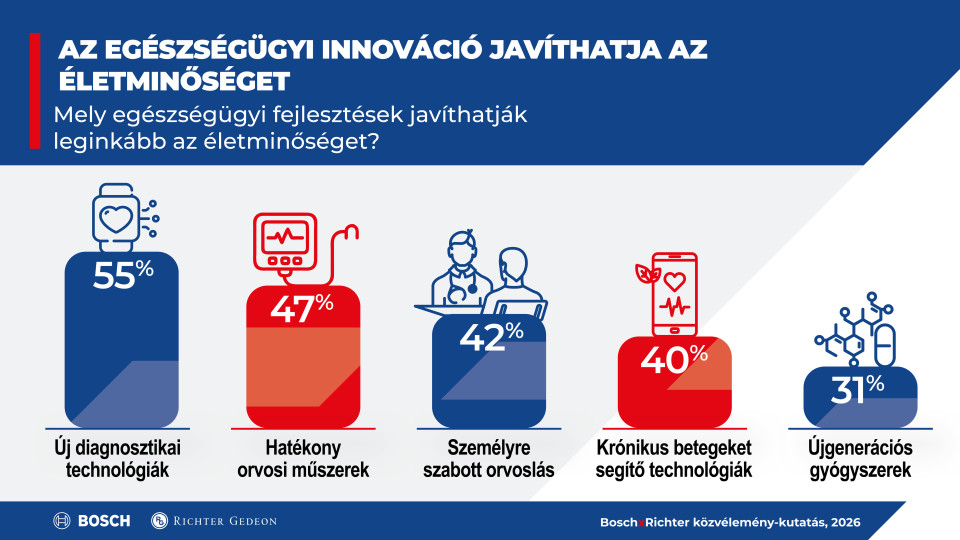
Based on the joint research by Bosch and Richter, respondents view disease detection and the new types of diagnostic technologies that enable it as the most important (55%). There is also strong support for the development of effective medical devices and procedures (47%) and for innovations related to personalized medicine (42%). Many highlight technologies that improve the quality of life for patients with chronic or incurable conditions, such as home health monitoring devices and remote patient monitoring systems (40%). Furthermore, one in three respondents highlights the importance of developing modern, next-generation medicines (31%). The survey reveals that two-thirds of respondents (66%) already use or consider using digital devices (e.g., smartwatch, smart ring, fitness app, sleep monitor) or applications to track their own health.
Safe and stress-free on the road: advanced driver assistance systems would be popular even as standard equipment.
Innovation in the automotive industry is ongoing, and safety solutions are becoming widespread, yet traffic risks remain a reality on the roads. “Technology, the integration of artificial intelligence, and advanced driver assistance systems can not only make transportation safer but also take a significant burden off of people’s shoulders: they save time and reduce stress, substantially improving the quality of everyday life,” emphasized Attila Horváth, representative of the Bosch Group in Hungary and in the Adriatic region.
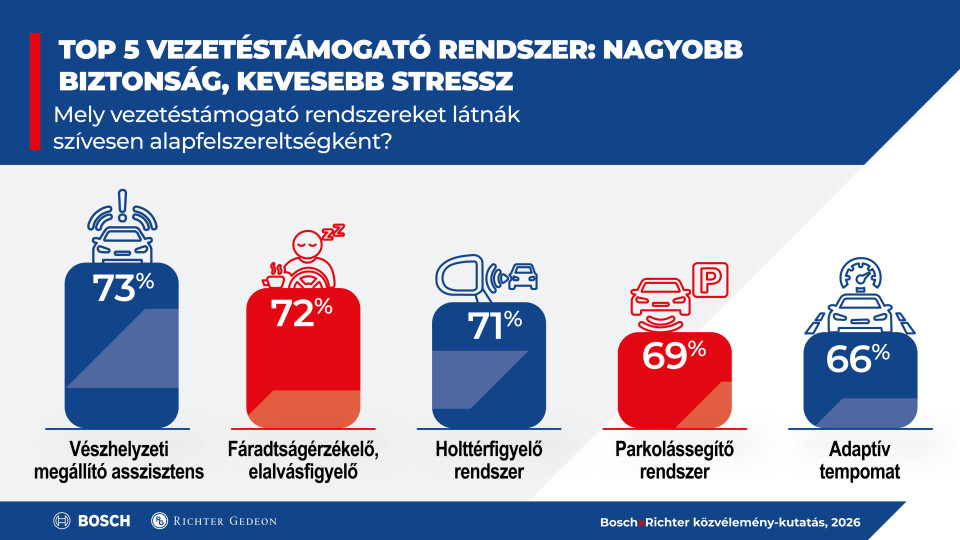
Results from the representative survey indicate a high level of openness and strong trust regarding driver-assistance technologies: the majority would value and support the inclusion of comfort- and safety-enhancing ADAS systems as standard factory equipment in future new cars. Topping the list is the emergency stop assistant (73%), which safely pulls the vehicle over to the side of the road in the event of a medical emergency. This is followed by fatigue and drowsiness detection (72%), blind-spot monitoring and rear cross-traffic alert (71%), ultrasonic parking assistance with a reversing camera (69%), and adaptive cruise control that can maintain speed and following distance (66%). Drivers would also welcome several other features as standard equipment, including the automatic emergency braking system (65%), automatic headlight control capable of switching between low and high beams (65%), and a traffic sign and speed limit recognition system (63%).
Artificial Intelligence the right way: Hungarians expect tangible benefits, but do not anticipate AI revolution in human relationships
Given its presence in almost every area of life, it is clear artificial intelligence (AI) could have a significant impact on our fundamental quality of life in the not-too-distant future.
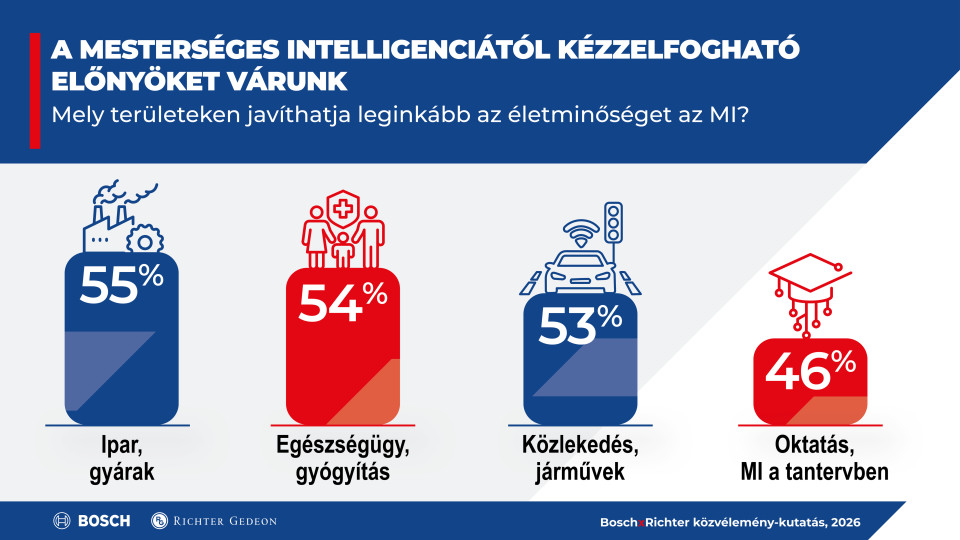
Well over half of respondents believe that industry stands to benefit the most from AI: they believe that artificial intelligence will become an integral part of factory operations, improve product quality, speed up production, and reduce manufacturing costs (55%). Nearly as many respondents expect AI to gain ground in healthcare, where it will aid in the early detection of diseases, more accurate diagnoses, and personalized treatment (54%). Respondents also consider the continued expansion of AI in the mobility sector to be a likely scenario, noting that its integration into vehicles and traffic management systems will make transportation even more reliable and comfortable (53%). Nearly half of the respondents expect AI to appear in school curricula in the coming years, with children and young people learning the proper use of the technology during their education (46%). However, Hungarians are least likely to believe that artificial intelligence could complement or improve human relationships in the foreseeable future (36%).
BoschxRichter Innovators’ Day – the fourth edition
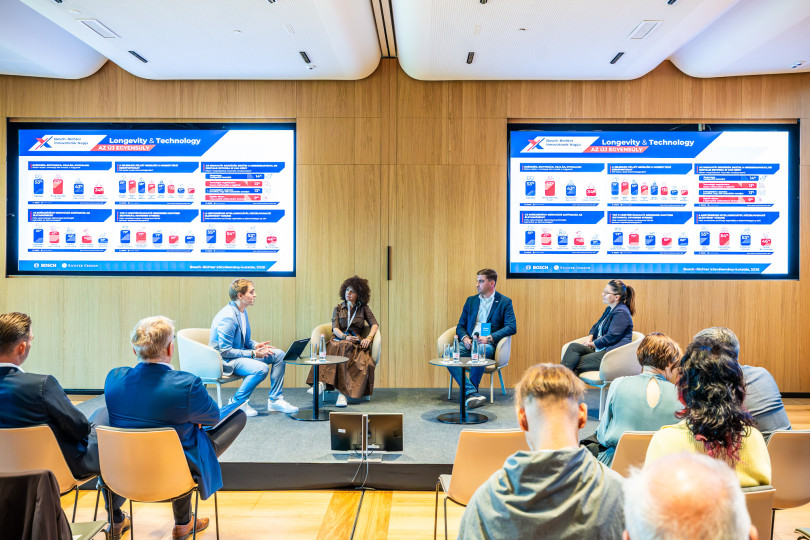
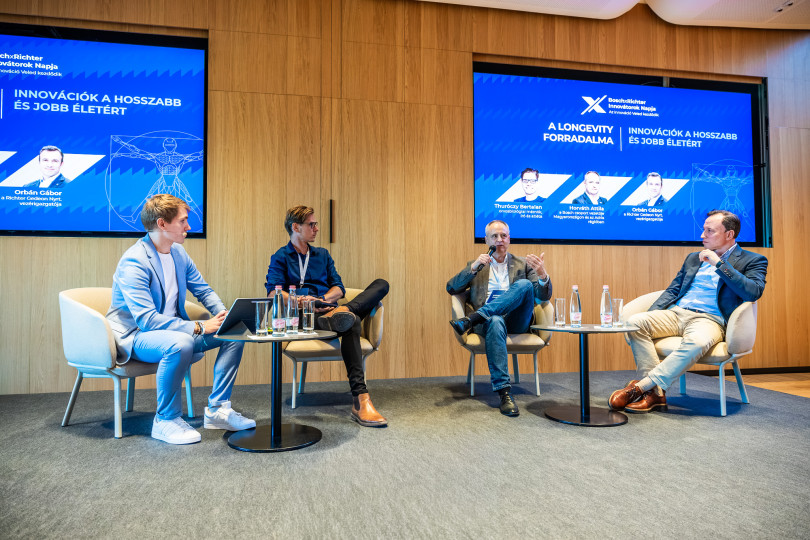
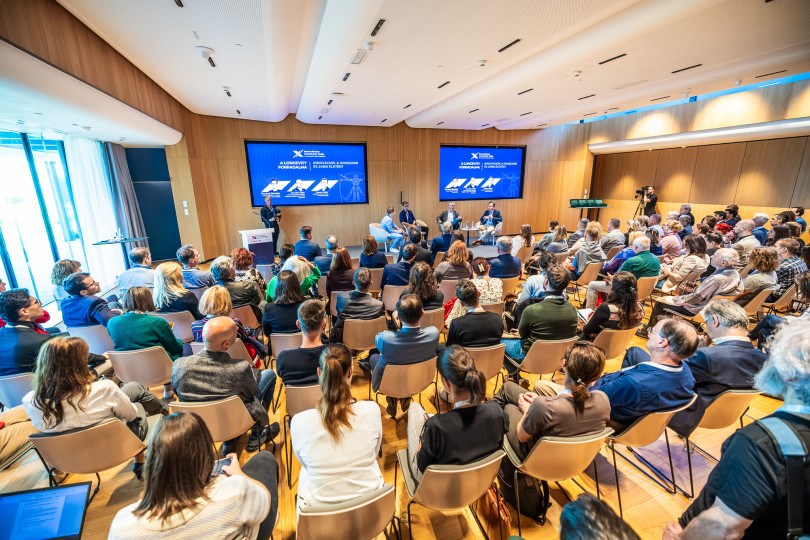
The Bosch Group in Hungary and Gedeon Richter Plc., two of Hungary’s leading innovative corporations, organized their joint conference on the latest technology trends this year for the fourth time. The event focuses on current issues in research, development and technology, while also paying tribute to the two founders, Robert Bosch and Gedeon Richter. The 2026 event took place at the Richter Center in Budapest, where alongside professional presentations, small-group discussions and workshops, the two companies also presented their latest joint public opinion survey.
Research Methodology
The public opinion survey was conducted by the Europion research institute on behalf of the Bosch Group in Hungary and Gedeon Richter Plc. Data collection via mobile and web-based applications took place at the end of June 2026. The survey is representative of the Hungarian population aged 16 and older, by gender, age group, educational level, place of residence, and region. A total of 1,712 people participated in the research.
Zita Hella Varga
Phone: +36 70 667-6374
Bosch has been present in Hungary since 1898 with its products. After its re-establishment as a regional trading company in 1991, Bosch has grown into one of Hungary’s largest foreign industrial employers with currently ten subsidiaries. In fiscal 2025 it had total net sales of 1.926 billion forints and consolidated sales to third parties on the Hungarian market of 303 billion forints. The Bosch Group in Hungary employs around 16,800 associates (as of December 31, 2025). In addition to its manufacturing, commercial and development business, Bosch has a network of sales and service operations that covers the entire country.
The Bosch Group is a leading global supplier of technology and services. It employs roughly 413,000 associates worldwide (as of December 31, 2025). The company generated
sales of 91 billion euros in 2025. Its operations are divided into four business sectors: Mobility, Industrial Technology, Consumer Goods, and Energy and Building Technology. With its business activities, the company aims to use technology to help shape universal trends such as automation, digitalization, electrification, and artificial intelligence. In this context, Bosch’s broad diversification across regions and industries strengthens its innovativeness and robustness. Bosch uses its proven expertise in hardware, software, and services to offer customers cross-domain solutions from a single source. It also applies its expertise in connectivity and artificial intelligence in order to develop and manufacture intelligent, user-friendly, and sustainable products. With technology that is “Invented for life,” Bosch wants to help improve quality of life and conserve natural resources. The Bosch Group comprises Robert Bosch GmbH and its roughly 500 subsidiary and regional companies in over 60 countries. Including sales and service partners, Bosch’s global manufacturing, engineering, and sales network covers nearly every country in the world. Bosch’s innovative strength is key to the company’s further development. Bosch employs some 82,000 associates in research and development.
The company was set up in Stuttgart in 1886 by Robert Bosch (1861-1942) as “Workshop for Precision Mechanics and Electrical Engineering.” The special ownership structure of Robert Bosch GmbH guarantees the entrepreneurial freedom of the Bosch Group, making it possible for the company to plan over the long term and to undertake significant upfront investments in the safeguarding of its future. Ninety-four percent of the share capital of Robert Bosch GmbH is held by Robert Bosch Stiftung GmbH, a limited liability company with a charitable purpose. The remaining shares are held by Robert Bosch GmbH and by a company owned by the Bosch family. The majority of voting rights are held by Robert Bosch Industrietreuhand KG. It is entrusted with the task of safeguarding the company’s long-term existence and in particular its financial independence – in line with the mission handed down in the will of the company’s founder, Robert Bosch.
Additional information is available online at www.bosch.hu, iot.boschblog.hu, www.bosch.com, www.iot.bosch.com, www.bosch-press.com.