



Budapest, Hungary – Mediterranean summers, Scandinavian winters, constant vibration, sand, mud, acid rain – we rarely consider everything our everyday devices must withstand. From cars to mobile phones, household appliances to heat pumps, medical sensors to trucks – reliable operation and durability are essential. Only testing to the highest standards can ensure this – from product concept to series production. Bosch’s 20,000-square-meter instrumented research and test laboratories in Budapest offer a high-tech solution and are now also open to product developers from external companies.
Replicating extreme conditions: testing from automotive to aerospace
“They put me in a salty well, then take me out; they put me under a wheel, then take me out,” goes a familiar Hungarian nursery rhyme. Similar procedures really do take place in the laboratories of the Bosch Engineering Center Budapest, testing a wide variety of components and products for the automotive, road safety, electronics, medical technology, and even aerospace sectors – to ensure lasting, predictable, and safe operation.
Stress at its peak: test chambers, shakers, and years of aging in just hours
Environmental, climatic, and durability tests in Bosch’s testing laboratories examine how products withstand extreme physical conditions, including freezing temperatures, intense sunlight, humidity, salt spray, vibration, chemicals, dust, and water.
To understand these environmental challenges in practice, consider driver assistance cameras mounted behind windshields or radar sensors fitted to cars. They must see reliably in blazing sunshine and on winter roads while constantly in motion. External units also face flying stones, rain, mud, and salty slush. “Bosch’s Budapest test laboratories hold all the required international manufacturer approvals and ISO accreditations. We carry out tens of thousands of tests each year. Our environmental tests ensure that every mechanical and electronic component withstands heat, UV radiation, snow, ice, and acidic conditions, resists water ingress, and tolerates constant vibration, among many other stresses,” Zsolt Farkas emphasized.
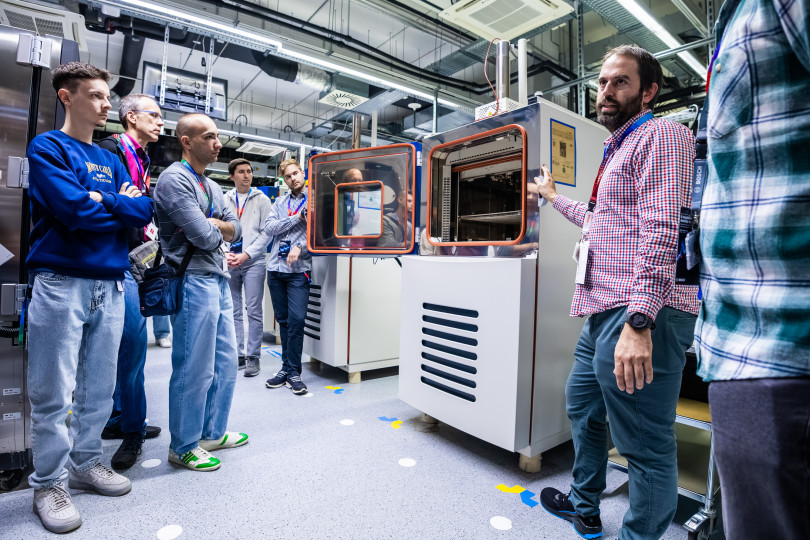
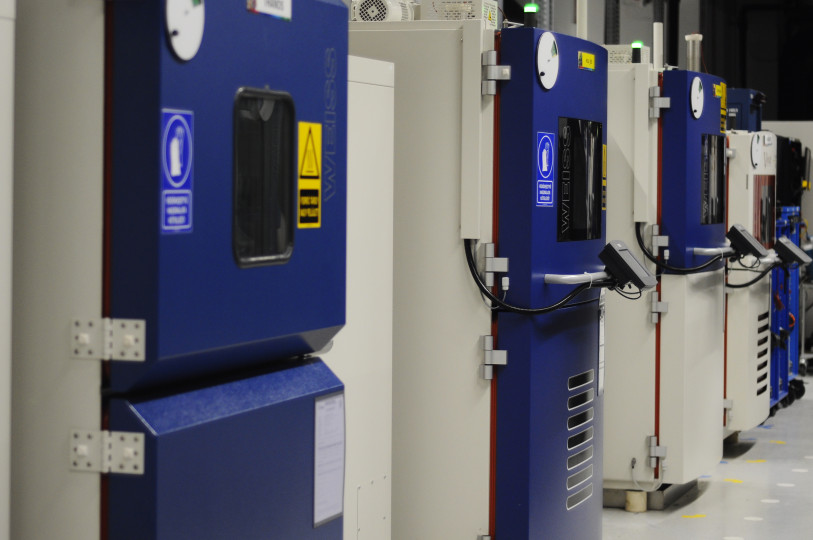
Bosch’s Budapest test center has nearly 400 environmental test chambers that simulate a range of extreme environmental conditions. Some climatic chambers can subject devices to sustained temperatures of up to +300 °C, while thermal shock chambers can produce abrupt temperature changes between –40 and +150 °C within seconds. Among many other methods, the laboratories offer tests against water and dust ingression, as well as tests for resistance to corrosion and chemicals.
The test center’s vibration shakers and accelerated aging procedures can simulate as much as 10-15 years of environmental exposure in just a few hours, revealing how products will withstand future stresses and extreme conditions. If required, its vibration test systems can subject a component to up to 2,000 vibration cycles per second, reproducing the effects of a decade of driving on the roughest dirt roads in a short time.
Looking inside: tracking down hidden defects with CT and X-rays
Prolonged, intensive use can cause changes in materials that jeopardize equipment operation. CT, X-ray, and laser inspections – more commonly associated with healthcare – are used at the test center for physical failure analysis of electronic units, sensors, and conventional components alike. The exceptional measurement precision of Bosch’s high-tech test laboratory allows defects and damage as small as one three-hundredth of the thickness of a human hair to be detected in components, providing further insights for product development.
Interference-free driving: electronic communication and cybersecurity under scrutiny
Modern cars, like homes and factories, contain numerous electronic devices operating simultaneously: control units, the instrument cluster, navigation, Bluetooth, and dozens of other radio devices. “Bosch’s electromagnetic compatibility (EMC) tests ensure that electronic devices do not interfere with each other: no product should emit unwanted signals into its surroundings, and each must be immune to external interference,” explained Zsolt Farkas. The aim is to ensure that the vehicle’s electronic and safety systems do not disrupt each other and without performance degradation according to defined acceptance criteria. Bosch’s test center also performs network conformance and product security testing, including penetration tests on electronic control units used in vehicles.
Quiet, please: making noise visible with an acoustic camera
Quiet operation is now a basic requirement for vehicles, machinery, and equipment. Everyone knows how irritating a noisy lawn mower, vacuum cleaner, or leaf blower can be. Strict standards therefore govern their noise emissions, which must be measured and tested during product development. Yet even slight rattles and unpleasant resonances can be equally irritating in an otherwise quiet environment, such as an electric vehicle’s cabin. Manufacturers therefore take particular care to eliminate unwanted noise from electric drives and all installed components.
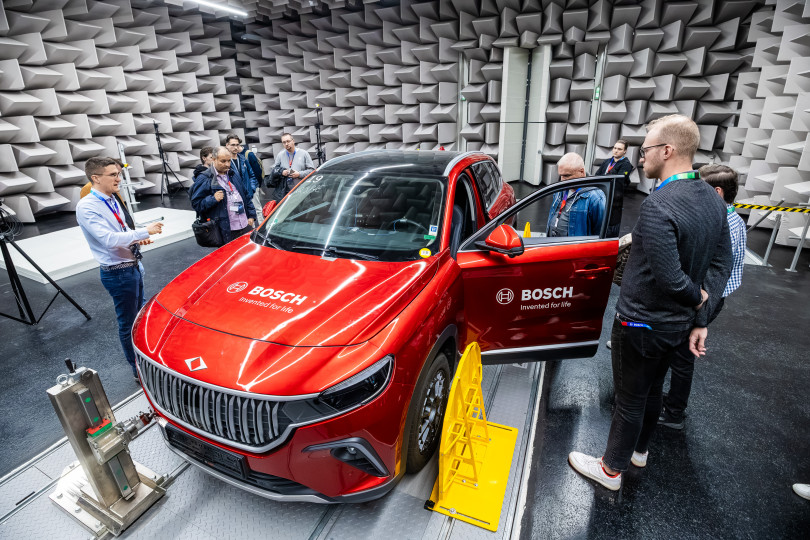
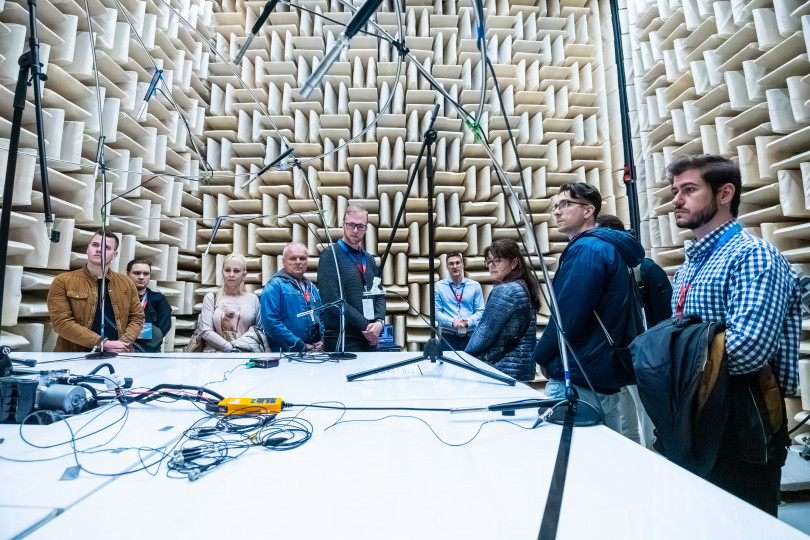
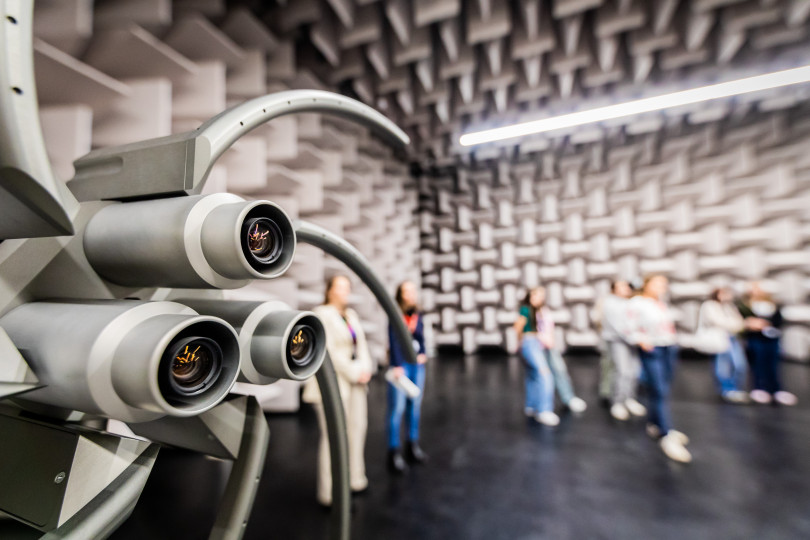
The Noise, Vibration and Harshness (NVH) laboratory at Bosch’s Budapest test center performs instrumented tests on everything from microsensors to complete vehicles, and from household appliances to power tools, to minimize noise and vibration.
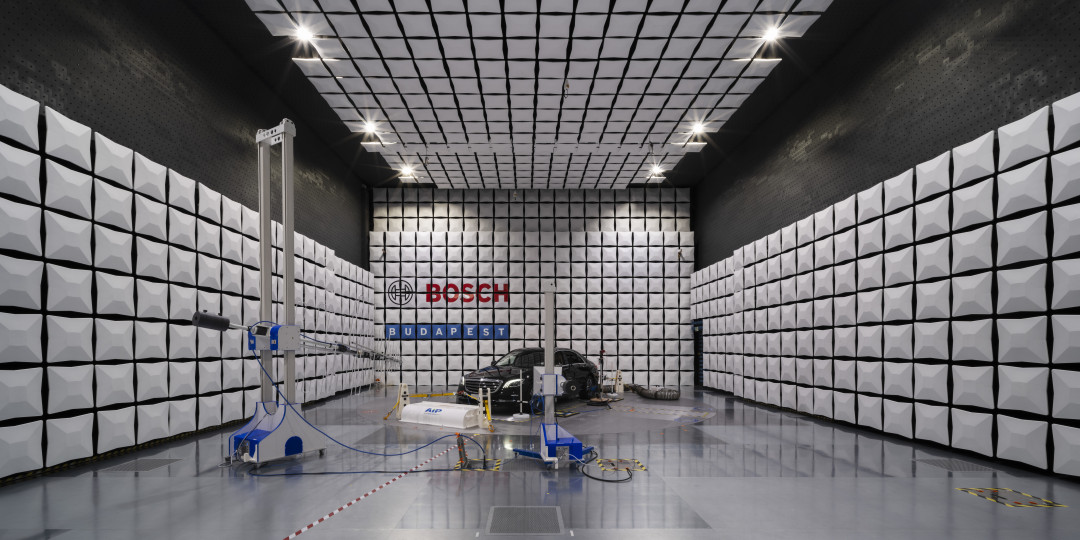
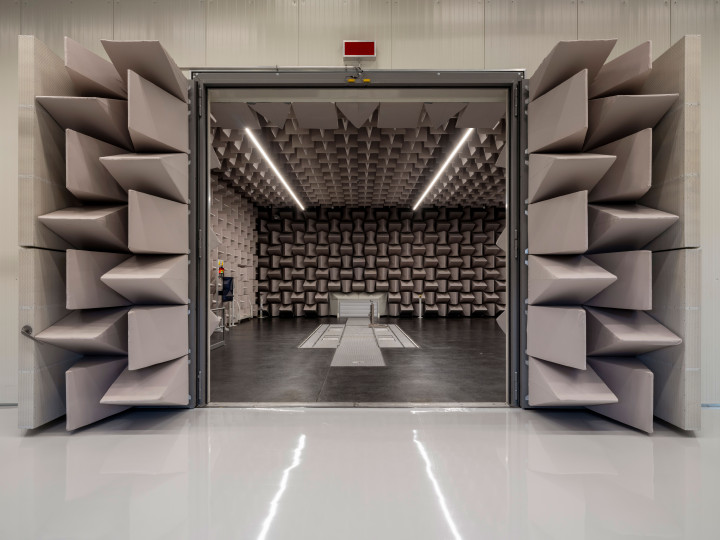
Testing takes place in anechoic chambers, where the environment is so free of noise that you can even hear your own heartbeat. Bosch’s test center has an anechoic chamber large enough to accommodate heavy trucks. Noise, including pass-by noise, can be tested on a chassis dynamometer at speeds of up to 250 km/h, with simulated headwinds of up to 120 km/h. Specialized methods for analyzing measurements include an acoustic camera – which visually pinpoints noise sources – and AI and big data applications developed by Bosch.
Zita Hella Varga
Phone: +36 70 667-6374
Bosch has been present in Hungary since 1898 with its products. After its re-establishment as a regional trading company in 1991, Bosch has grown into one of Hungary’s largest foreign industrial employers with currently ten subsidiaries. In fiscal 2025 it had total net sales of 1926 billion forints and consolidated sales to third parties on the Hungarian market of 303 billion forints. The Bosch Group in Hungary employs around 16,800 associates (as of December 31, 2025). In addition to its manufacturing, commercial and development business, Bosch has a network of sales and service operations that covers the entire country.
The Bosch Group is a leading global supplier of technology and services. It employs roughly 413,000 associates worldwide (as of December 31, 2025). The company generated
sales of 91 billion euros in 2025. Its operations are divided into four business sectors: Mobility, Industrial Technology, Consumer Goods, and Energy and Building Technology. With its business activities, the company aims to use technology to help shape universal trends such as automation, digitalization, electrification, and artificial intelligence. In this context, Bosch’s broad diversification across regions and industries strengthens its innovativeness and robustness. Bosch uses its proven expertise in hardware, software, and services to offer customers cross-domain solutions from a single source. It also applies its expertise in connectivity and artificial intelligence in order to develop and manufacture intelligent, user-friendly, and sustainable products. With technology that is “Invented for life,” Bosch wants to help improve quality of life and conserve natural resources. The Bosch Group comprises Robert Bosch GmbH and its roughly 500 subsidiary and regional companies in over 60 countries. Including sales and service partners, Bosch’s global manufacturing, engineering, and sales network covers nearly every country in the world. Bosch’s innovative strength is key to the company’s further development. Bosch employs some 82,000 associates in research and development.
Additional information is available online at: www.bosch.hu, iot.boschblog.hu, www.bosch.com, www.iot.bosch.com, www.bosch-press.com.