
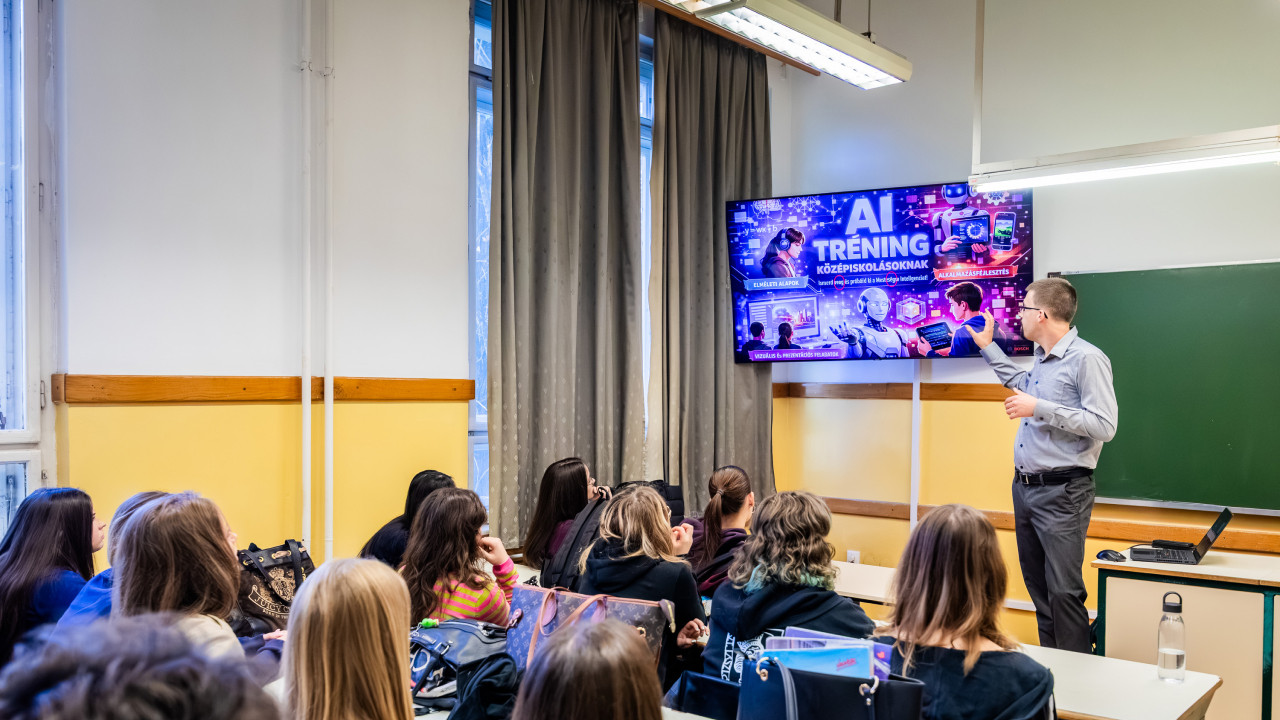
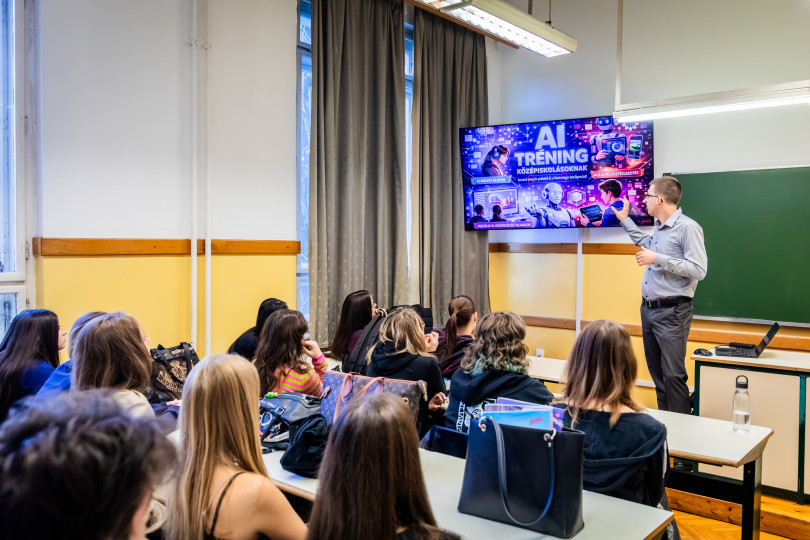
How can we ask artificial intelligence the right questions? How can we tell if its answers are reliable? How can AI be used in learning and in everyday life, and when should we take a critical view of what it produces? These questions, which are increasingly affecting young people’s everyday lives, are explored in Bosch’s artificial intelligence education programme for secondary school students. According to the company’s plans, the programme will be rolled out to a total of 20 secondary schools nationwide in the 2026/2027 academic year, enabling around 800 secondary school students to gain practical experience in using artificial intelligence.


Student feedback is also shaping the programme
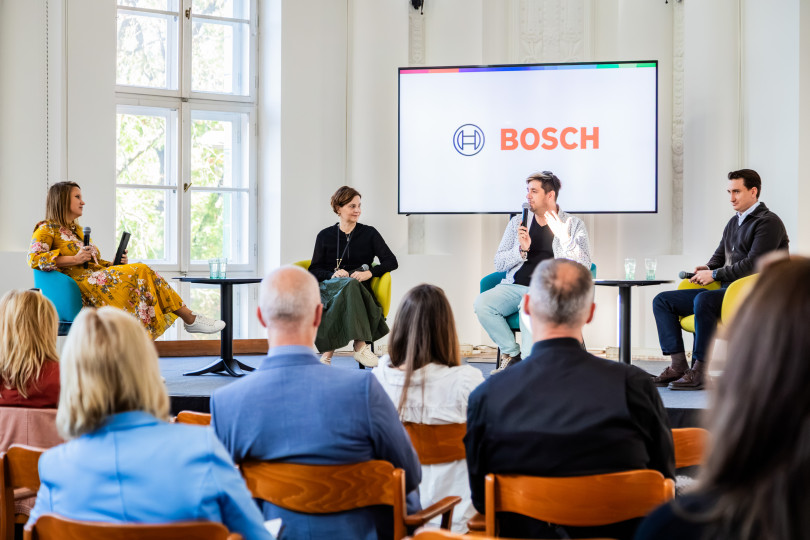
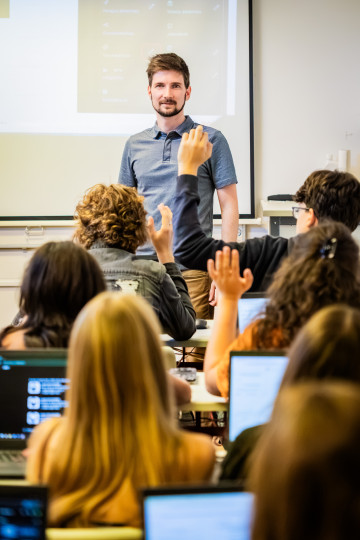
Bosch announced the initiative at a press event combined with an educational session at the Szent László Secondary Grammar School in Kőbánya. The event was preceded by two pilot schemes: at the start of the year, 40 secondary school students in Aszód and 60 in Szombathely took part in the company’s AI training. One of the key aims of the pilot schemes was to shape the programme based on the pupils’ experiences and feedback.
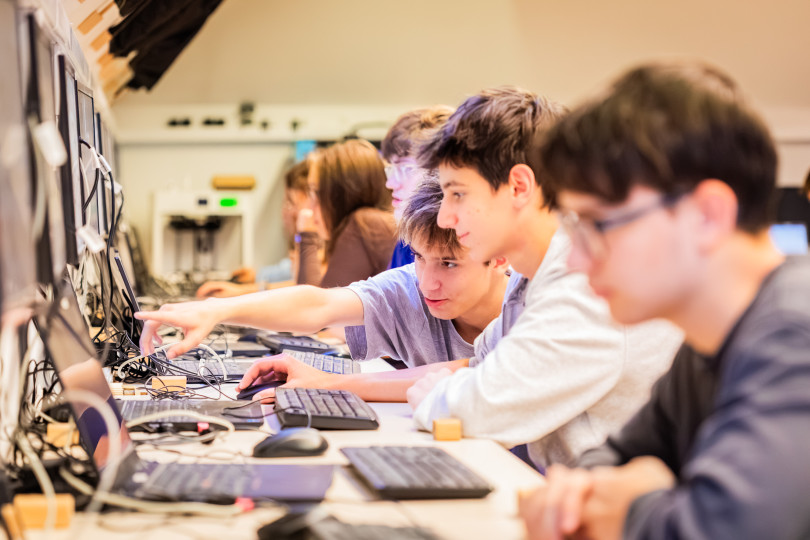
Due to the extremely rapid development of technology, the curriculum cannot be regarded as static; Bosch’s experts are constantly updating the course content and the tools demonstrated. Even during practical tasks, they do not restrict themselves solely to pre-determined topics. Students can experiment within their own areas of interest, enabling them to experience first-hand how artificial intelligence can be used to solve various problems and tackle creative tasks. In addition to presentation-creating tools, the programme also placed an emphasis on image and video generation.
Experts who develop the world’s leading technologies are coming into the classroom
A distinctive feature of the programme is that secondary school students do not merely learn about AI at a theoretical level. Bosch experts from a variety of professional backgrounds take part in the educational programme. Alongside AI specialists, experienced development engineers and PhD students, project managers and communication specialists work to ensure that technological knowledge reaches the classrooms in a form that is understandable to secondary school students and can be put into practice. The aim of the sessions is therefore not to teach how to use specific, current AI applications, but rather to impart a way of thinking that will remain useful even when today’s popular tools are replaced by new solutions. Among other things, the students are examining how to best write prompts – that is, give instructions to – the AI, how the results change when questions are refined, what kinds of errors a generative model might make, and how the content it generates can be verified and further developed. “In the long term, technological competitiveness cannot be separated from the knowledge possessed by the next generation. It is also a crucial issue for Hungary that young people should not merely be users of new technologies but should understand how they work and the possibilities they offer. Bosch can contribute knowledge to this effort that is underpinned by real-world development and engineering experience. For us, this programme is therefore both a transfer of knowledge and at the same time, an investment to ensure that future generations are prepared for technological challenges and possess up to date knowledge,” emphasised Teodóra Bodó, director of communication and governmental affairs of the Bosch Group in Hungary and the Adriatic region.
Survey also confirms the importance of AI education in secondary schools
The results of a survey conducted by Bosch in the spring of 2025, amongst nearly 800 secondary school pupils aged between 16 and 20 also confirm that, alongside higher education institutions, there is a great need to develop technological skills in secondary education as well. Whilst in a survey carried out in the autumn of 2024, 53 percent of the Hungarian adult population believed that artificial intelligence would be the most influential technology of the coming decade – a figure that rose to 60 percent a year later – 65 percent of the secondary school students surveyed agreed with this statement. According to the survey, 84 percent of students are already planning to incorporate artificial intelligence into their studies in some way and believe that AI skills will be essential in their future workplaces. The survey also highlighted that 90 percent of the school pupils who responded already consider these skills to be important for their studies.
Bosch Hungary Podcast: technology explained in simple terms
The Bosch Hungary Podcast explores the latest topics in innovation, research and development, seeking clear and accessible answers to the most pressing questions about the technology of the future with the help of expert guests. Anyone who’d like to find out more about how secondary school students view artificial intelligence, how we can learn and develop with AI, how it supports creativity, why critical and responsible thinking is important, or even what an engineering expert recommends, can listen to – or even watch – the Bosch Hungary Podcast on YouTube, Spotify, Apple Podcasts and Simplecast!
Mónika Hack
+36 70 510 5516
Bosch has been present in Hungary since 1898 with its products. After its re-establishment as a regional trading company in 1991, Bosch has grown into one of Hungary’s largest foreign industrial employers with currently ten subsidiaries. In fiscal 2025 it had total net sales of 1.926 billion forints and consolidated sales to third parties on the Hungarian market of 303 billion forints. The Bosch Group in Hungary employs around 16,800 associates (as of December 31, 2025). In addition to its manufacturing, commercial and development business, Bosch has a network of sales and service operations that covers the entire country.
The Bosch Group is a leading global supplier of technology and services. It employs roughly 413,000 associates worldwide (as of December 31, 2025). The company generated
sales of 91 billion euros in 2025. Its operations are divided into four business sectors: Mobility, Industrial Technology, Consumer Goods, and Energy and Building Technology. With its business activities, the company aims to use technology to help shape universal trends such as automation, digitalization, electrification, and artificial intelligence. In this context, Bosch’s broad diversification across regions and industries strengthens its innovativeness and robustness. Bosch uses its proven expertise in hardware, software, and services to offer customers cross-domain solutions from a single source. It also applies its expertise in connectivity and artificial intelligence in order to develop and manufacture intelligent, user-friendly, and sustainable products. With technology that is “Invented for life,” Bosch wants to help improve quality of life and conserve natural resources. The Bosch Group comprises Robert Bosch GmbH and its roughly 500 subsidiary and regional companies in over 60 countries. Including sales and service partners, Bosch’s global manufacturing, engineering, and sales network covers nearly every country in the world. Bosch’s innovative strength is key to the company’s further development. Bosch employs some 82,000 associates in research and development.
The company was set up in Stuttgart in 1886 by Robert Bosch (1861-1942) as “Workshop for Precision Mechanics and Electrical Engineering.” The special ownership structure of Robert Bosch GmbH guarantees the entrepreneurial freedom of the Bosch Group, making it possible for the company to plan over the long term and to undertake significant upfront investments in the safeguarding of its future. Ninety-four percent of the share capital of Robert Bosch GmbH is held by Robert Bosch Stiftung GmbH, a limited liability company with a charitable purpose. The remaining shares are held by Robert Bosch GmbH and by a company owned by the Bosch family. The majority of voting rights are held by Robert Bosch Industrietreuhand KG. It is entrusted with the task of safeguarding the company’s long-term existence and in particular its financial independence – in line with the mission handed down in the will of the company’s founder, Robert Bosch.
Additional information is available online at www.bosch.hu, iot.boschblog.hu, www.bosch.com, www.iot.bosch.com, www.bosch-press.com.