
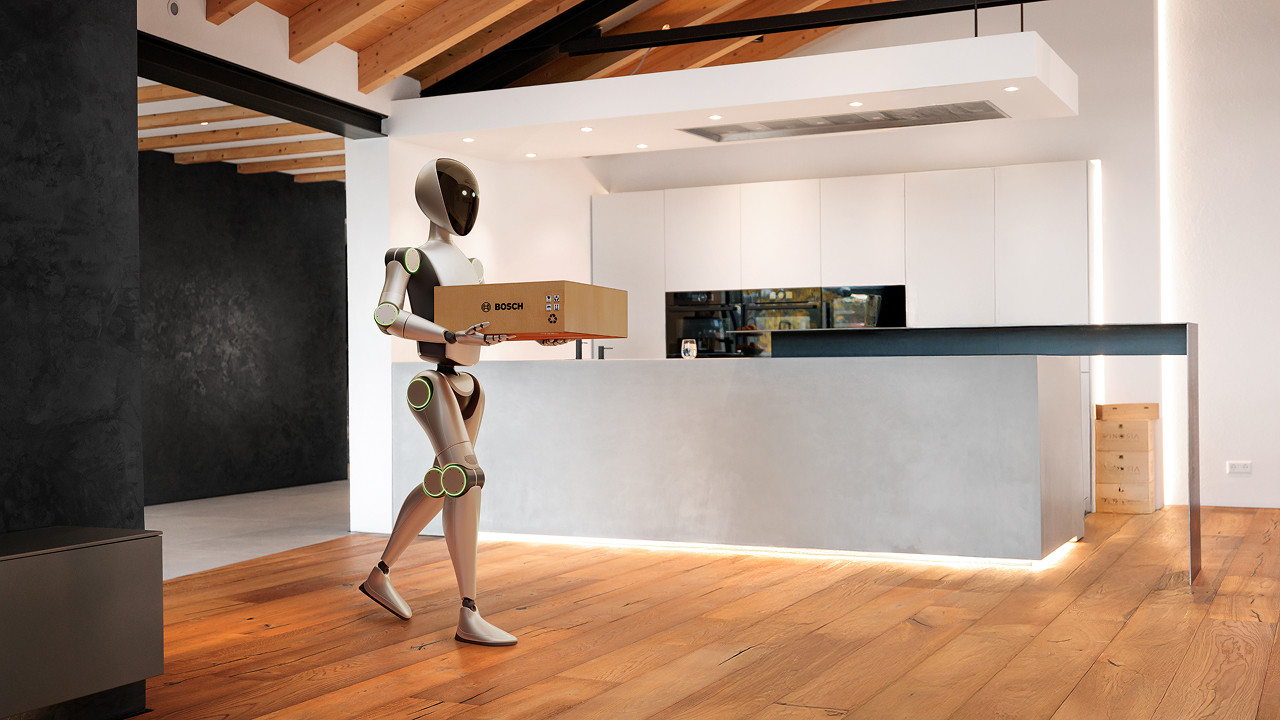
The age of robots is closer than we think: intelligent robotic systems are no longer just working alongside us on assembly lines, but are also entering the fields of healthcare and education, and with that, our everyday lives. How does robot psychology make machines more “human”? How can robots help us address the demographic and economic challenges ahead, and what kinds of innovative roles will they play in the factories of the future? Are we ready to live and work together with them?
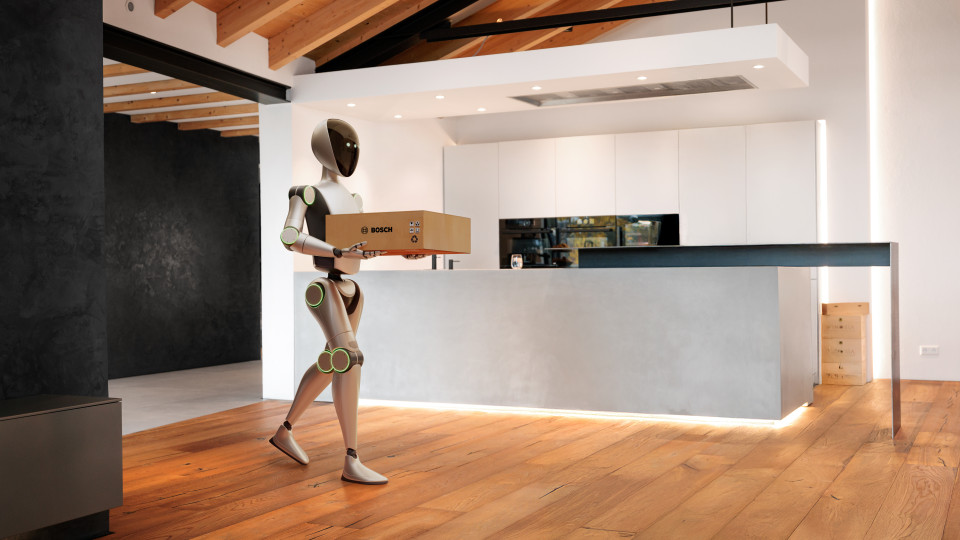
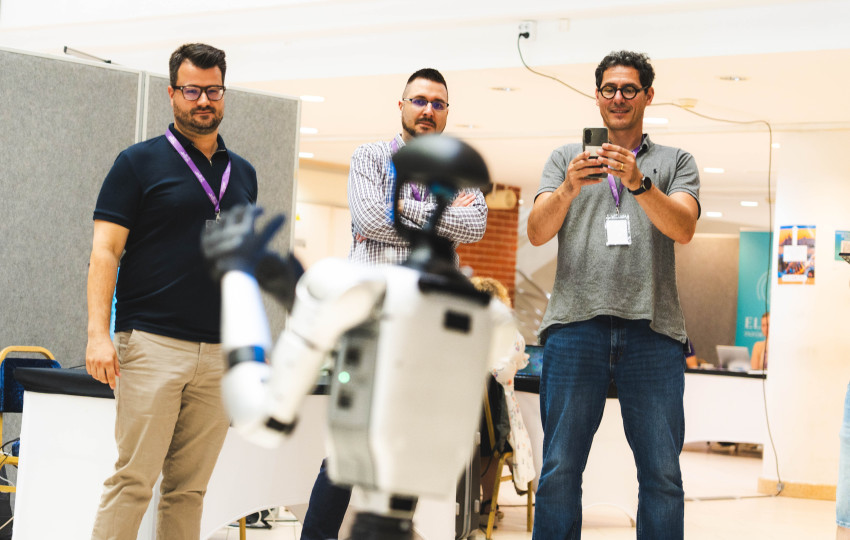
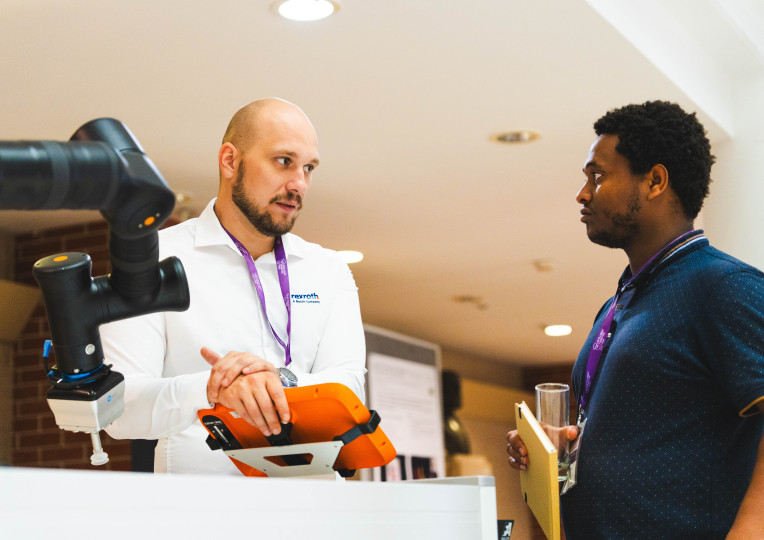
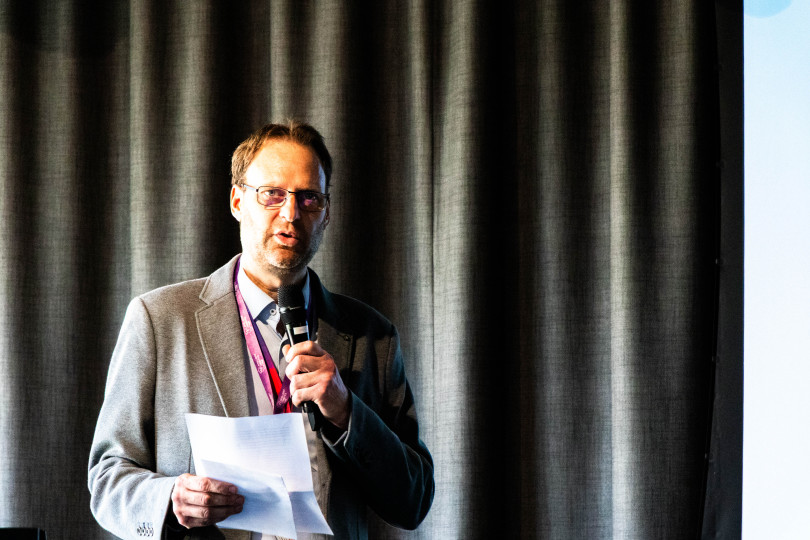
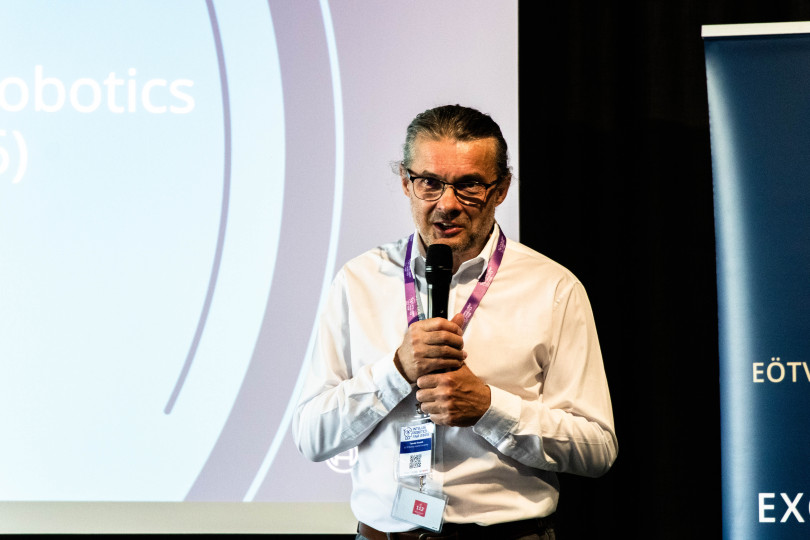



Intelligent Robotics FAIR 2026: Focus on human-centered robots
The Intelligent Robotics FAIR 2026 innovation forum, organized in collaboration between the Eötvös Loránd University (ELTE) Faculty of Informatics and the Bosch Group in Hungary, seeks to address the most pressing issues in robotics technology. This year marks the second edition of Hungary’s first comprehensive event on robotics and artificial intelligence organized through a university-industry partnership. The central theme of the event is the social and industrial integration of intelligent robotic systems, with a strong emphasis on human-centered robotics and embodied AI.
The international science and innovation event offers an insight into the latest application areas of rapidly developing robotics and artificial intelligence technologies through presentations, expert discussions and live demonstrations, featuring innovations from international and domestic universities, research institutes and technology companies, taking place at ELTE and the Bosch Budapest Innovation Campus between June 18 and 20, 2026. The three-day event includes conferences, robotics exhibitions and a family day, building a bridge between science, the corporate sector, and everyday users and enthusiasts. The Intelligent Robotics FAIR concludes with the Robot Rendezvous Family Day 2026 event, where the general public can explore the intelligent developments of the future and the fascinating world of robotics and artificial intelligence through entertaining demonstrations, workshops, games and educational presentations. Robot Rendezvous 2026 will also host the finals of the Robotics 4 Good Hungary international robotics competition, as well as the finals of the ELTE-Qubit robotics card game development competition.
ELTE-Bosch joint solutions in the world of robotics and AI
According to Bosch’s vision, the growth of robotics is opening a new chapter in innovation. The company plays a significant role in the development of AI-based robotics through its wide range of solutions both globally and in Hungary. The ELTE-Bosch Department of Artificial Intelligence has been operating successfully at ELTE’s Faculty of Informatics for six years now, and several of its research projects will be showcased at the Intelligent Robotics FAIR 2026 programs. The joint developments of ELTE and Bosch contribute to the advancement and industrial application of robotics, automated vehicles, computer vision, drone technology, and neuromorphic systems that mimic human brain function.
“As a leading global supplier of innovative technologies and services, Bosch is actively developing key components of automation and robotics, including the latest solutions that serve as the ‘brain and nervous system’ of robots. As part of our strategy, we are pleased to join the Intelligent Robotics FAIR 2026 events as an organizer, exhibitor and host. This event marks another important milestone in the professional collaboration between ELTE and Bosch. Our goal is to contribute to the expansion of the domestic innovation ecosystem and to shape the future of artificial intelligence and robotics in collaboration with the academic sector, for which the Intelligent Robotics FAIR 2026 provides an excellent professional platform,” said Mátyás Pótsa, director of innovation ecosystem at the Bosch Group in Hungary, about the conference.
“The Intelligent Robotics FAIR is being held for the second time this year in collaboration between Bosch and the Faculty of Informatics at ELTE. When we launched this unique event with the intention of starting a tradition, our goal was to provide an opportunity to researchers, engineers, companies, university students, decision-makers, and families interested in technology, to connect with one another on the topics of robotics and artificial intelligence, and to build a bridge between science, technology, and society. We are thrilled to achieve these goals in collaboration with the Bosch Group in Hungary for the second time,” emphasized Tamás Kozsik, dean of the Faculty of Informatics at ELTE.
Could robot doctors and robot nurses come to healthcare?
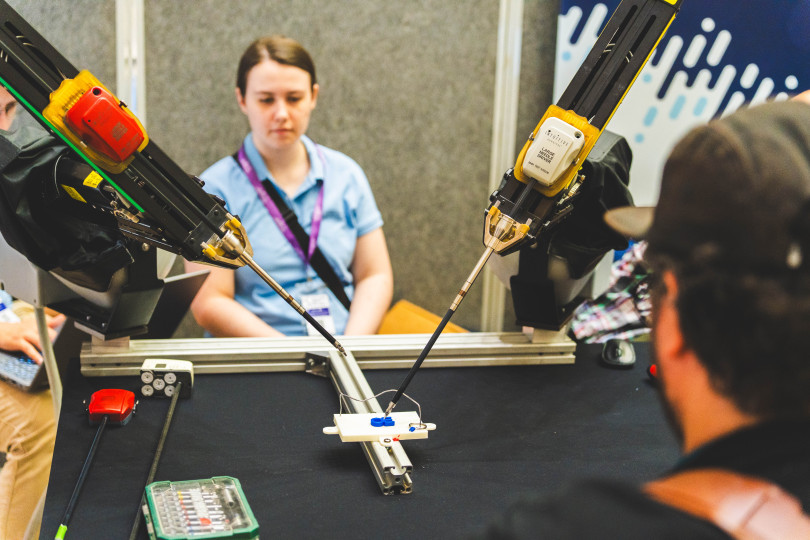
Innovations in the field of medical robotics represent one of the most promising areas of robotic technologies today. Conference participants can gain insight into the world of robot-assisted surgery that is already in use today, where specialized surgical robot arms help doctors in their work with pinpoint precision. This solution makes medical procedures more precise, safer, and less demanding for patients. As part of the interactive exhibition, visitors can try out controlling the surgical robot arm themselves using a special device, gaining direct experience of how this technology works.
According to the experts at the conference, medical robotics may soon help alleviate another important social problem: the shortage of caregivers and nursing staff. Robots offer an effective solution primarily for time-consuming, repetitive, or physically demanding caregiving tasks, freeing up more time and capacity for personal care and professional decision-making that truly requires a human presence.
Dilemmas surrounding humanoid robots: how can robot psychology help human-robot cooperation?
The new types of applications for robots and their user-friendly and safe operation present entirely new challenges to developers. The main question is not only how intelligent these systems are, but also how they are able to establish natural and trust-based relationships with humans. The field of robot psychology seeks to answer precisely this question. Speakers at the Intelligent Robotics 2026 conference emphasize that the social robots of the future can become effective assistants for example in healthcare, education, or the service sector, not only through advanced algorithms but also thanks to a deeper understanding of human behavior, communication and social interactions.
Sterile hospitals, hygienic public transportation – robots can achieve this too
In the field of hygiene, robotics will also help us fight pathogens in the future. At Intelligent Robotics FAIR, an autonomous robot will be presented that uses UV-C light while navigating rooms and disinfecting the air and surfaces without human contact. This futuristic machine could be used in hospitals, nursing homes, schools, or even on public transportation – almost anywhere where quick, chemical-free disinfection is needed.
Robot dogs, drones, and exploration robots can put their “necks” on the line for us
Autonomous vehicles, drones, robot dogs, and exploration robots with a wide range of uses can be effectively deployed even for tasks that pose a life-threatening risk to humans. At Intelligent Robotics FAIR, visitors can personally meet “robot explorers” that can successfully access hazardous locations such as caves, tunnel systems, underwater infrastructure, or the depths of flooded mines. They can dive, map hidden passages and bring back valuable data from extreme locations that were previously impossible for researchers to access.
Robots and digital twins could revolutionize industry
While the emergence of robots in healthcare and our everyday lives is in the near future, intelligent robotic systems are already playing a prominent role in the manufacturing sector, and this trend is only growing stronger. Intelligent Robotics FAIR 2026 showcases a wide spectrum of industrial robotics applications, including presentations of Bosch’s latest developments in this field. Visitors can gain a tangible understanding of how automated manufacturing, robotic material handling and AI-enabled sensing are transforming the industry, as well as how digital twins function in the operations of the next generation of factories. The conference highlights that in the factories of the future, robots, artificial intelligence and digital twins can work even more closely together to make production even faster, more precise and more efficient.
Detailed information about the extensive program of Intelligent Robotics FAIR 2026 is available on the event website: https://introbfair26.inf.elte.hu/
Zita Hella Varga
Phone: +36 70 667-6374
Bosch has been present in Hungary since 1898 with its products. After its re-establishment as a regional trading company in 1991, Bosch has grown into one of Hungary’s largest foreign industrial employers with currently ten subsidiaries. In fiscal 2025 it had total net sales of 1.926 billion forints and consolidated sales to third parties on the Hungarian market of 303 billion forints. The Bosch Group in Hungary employs around 16,800 associates (as of December 31, 2025). In addition to its manufacturing, commercial and development business, Bosch has a network of sales and service operations that covers the entire country.
The Bosch Group is a leading global supplier of technology and services. It employs roughly 413,000 associates worldwide (as of December 31, 2025). The company generated
sales of 91 billion euros in 2025. Its operations are divided into four business sectors: Mobility, Industrial Technology, Consumer Goods, and Energy and Building Technology. With its business activities, the company aims to use technology to help shape universal trends such as automation, digitalization, electrification, and artificial intelligence. In this context, Bosch’s broad diversification across regions and industries strengthens its innovativeness and robustness. Bosch uses its proven expertise in hardware, software, and services to offer customers cross-domain solutions from a single source. It also applies its expertise in connectivity and artificial intelligence in order to develop and manufacture intelligent, user-friendly, and sustainable products. With technology that is “Invented for life,” Bosch wants to help improve quality of life and conserve natural resources. The Bosch Group comprises Robert Bosch GmbH and its roughly 500 subsidiary and regional companies in over 60 countries. Including sales and service partners, Bosch’s global manufacturing, engineering, and sales network covers nearly every country in the world. Bosch’s innovative strength is key to the company’s further development. Bosch employs some 82,000 associates in research and development.
The company was set up in Stuttgart in 1886 by Robert Bosch (1861-1942) as “Workshop for Precision Mechanics and Electrical Engineering.” The special ownership structure of Robert Bosch GmbH guarantees the entrepreneurial freedom of the Bosch Group, making it possible for the company to plan over the long term and to undertake significant upfront investments in the safeguarding of its future. Ninety-four percent of the share capital of Robert Bosch GmbH is held by Robert Bosch Stiftung GmbH, a limited liability company with a charitable purpose. The remaining shares are held by Robert Bosch GmbH and by a company owned by the Bosch family. The majority of voting rights are held by Robert Bosch Industrietreuhand KG. It is entrusted with the task of safeguarding the company’s long-term existence and in particular its financial independence – in line with the mission handed down in the will of the company’s founder, Robert Bosch.
Additional information is available online at www.bosch.hu, iot.boschblog.hu, www.bosch.com, www.iot.bosch.com, www.bosch-press.com.