
The year 2025 proved that artificial intelligence is not only becoming an increasingly popular and intelligent conversation partner, but it is also fundamentally changing the world around us and our everyday habits. This year, artificial intelligence left the chat window and entered our lives. In 2025, a series of tangible and practical AI-based innovations appeared that could become our everyday partners in improving our transportation, safety, health, and quality of life. At Bosch, the innovative potential of AI was recognized in the early stages of the technology: today, all of the company's products either operate with artificial intelligence or are manufactured using AI. The developments presented by the company this year are a clear example of how AI-based products and solutions can help us in many different areas of our lives in practice.












Artificial intelligence sniffs out forest fires
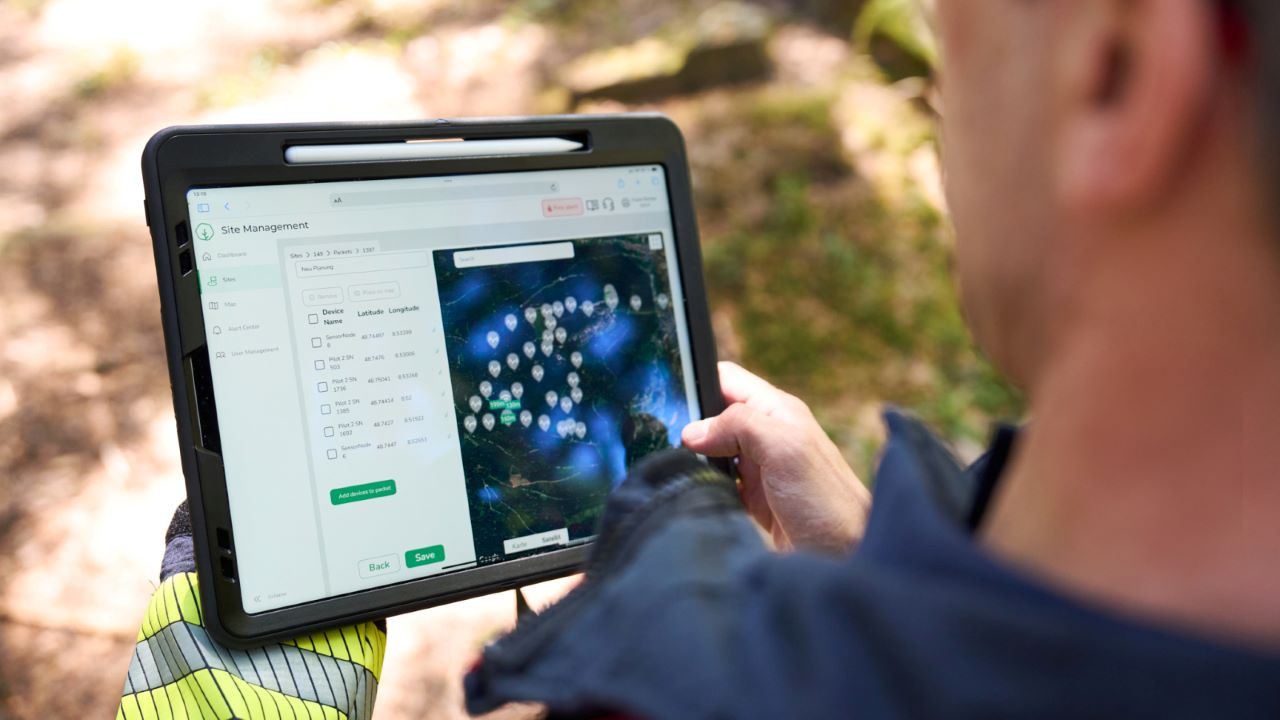
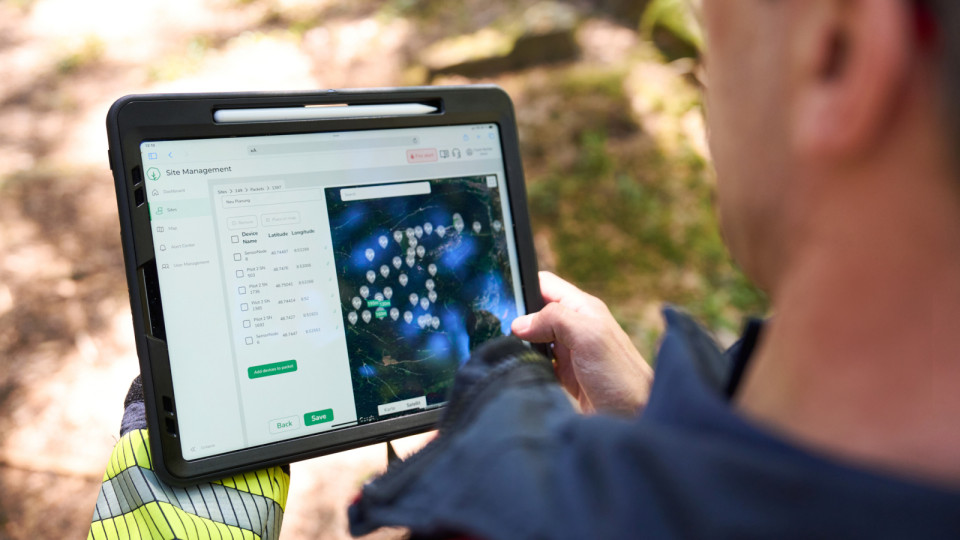
Extensive forest fires pose an increasing threat in many parts of the world, including Europe. The key question is whether it is possible to recognize the unfolding disaster in time and take the necessary steps. Bosch's intelligent forest and bush fire detection technology is able to “smell” the first signs of a developing fire early on in forests, recreational areas, and natural environments close to infrastructure and populated areas based on smoke gases spreading in the air. The sensors are placed around the vegetation area and use an AI-based algorithm to detect smoke gases in the early stages of smoldering, before a larger fire breaks out. Using artificial intelligence, the system automatically evaluates the composition of the gas mixtures, records the location of the smoke detection, and transmits temperature and weather data, including wind direction and speed, to a control center. The Bosch system can even send drones to the scene of the fire, which can assist in successful intervention with aerial photographs and high-resolution live videos. The outdoor sensors are self-sufficient in terms of energy thanks to their built-in solar panels, the devices recharge themselves even in cloudy weather or under tree canopy.
It hears for us, it sees for us: security voice recognition and smart camera systems can protect our homes
What good are home alarm systems if no one hears the emergency signal and no one can take action? Whether it's a break-in, a fire, a burst pipe or a leak, a quick response is key to minimizing damage. This year, Bosch introduced its intelligent Security+ services: smart camera functions, automatic sound analysis, security recordings transmitted to the cloud and – at least in Germany – a 24/7 emergency center all make the security of homes even more complete. For example, the microphones of indoor smart cameras recognize the noise of breaking glass or the warning sound of smoke and carbon monoxide detectors, so that in case of danger, an alarm can be immediately sent to the homeowner or the emergency center. Furthermore, cloud backup ensures that no important footage is lost, which may be needed by the insurance company, the police, or other authorities to investigate.
Smart crib saves lives and lulls babies to sleep
It is important for every family to ensure that their newborns and toddlers sleep safely, while parents also yearn for a good night’s sleep. Bosch's AI-powered smart crib monitors vital signs, such as heart rate and breathing rate. The smart crib’s software alerts parents in time if, for example, a stuffed animal or blanket covers the child's airways, but it also notifies parents if their child starts crying in their room. If their newborn has difficulty falling asleep, the smart crib can even automatically rock the baby to sleep.
Instead of a private chef, an AI oven can serve dinner for you
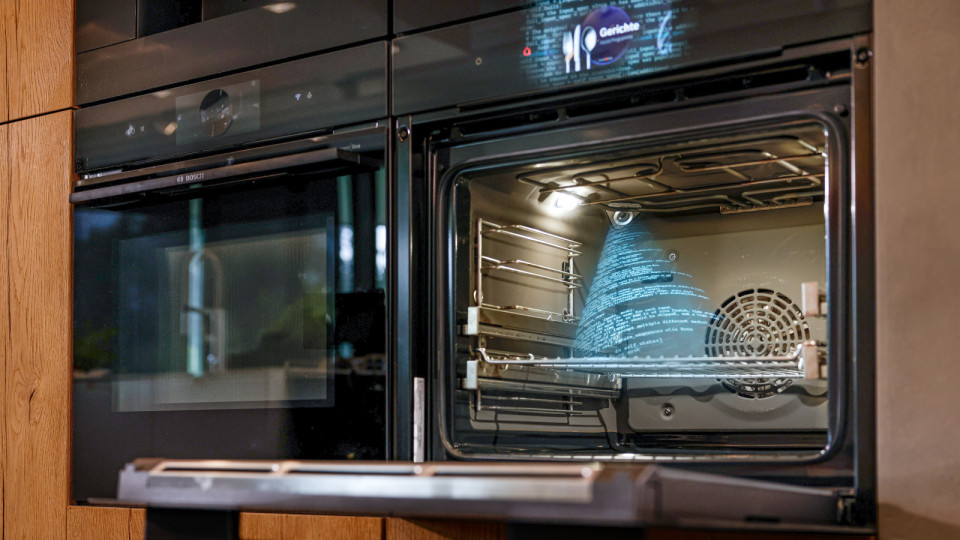
Bosch's smart oven can recognize around 80 types of prepared food on its own with the help of built-in sensors, cameras, and artificial intelligence. The appliance uses sensor data and continuously learning algorithms to control and optimize the entire baking process. All the user has to do is set the desired level of browning according to taste, and enjoy their dinner.
Self-learning fitness sensor helps with reliable performance measurement
Nowadays it is almost a basic requirement that we are able to record and evaluate our training performance as reliably as possible during exercise, as well as our body’s current reactions and parameters. This is relatively easy during longer, steady workouts, but it becomes more challenging with complex, fast-paced movements that include explosive elements, such as boxing, tennis, CrossFit, or interval training. Fitness bracelets and smartwatches based on Bosch motion sensors are able to reliably recognize extremely dynamic training routines and provide detailed feedback on their execution. The sensor is an intelligent measuring unit equipped with self-learning AI software that enables the smart sensor to learn new types of movement sequences during use.
No more range anxiety
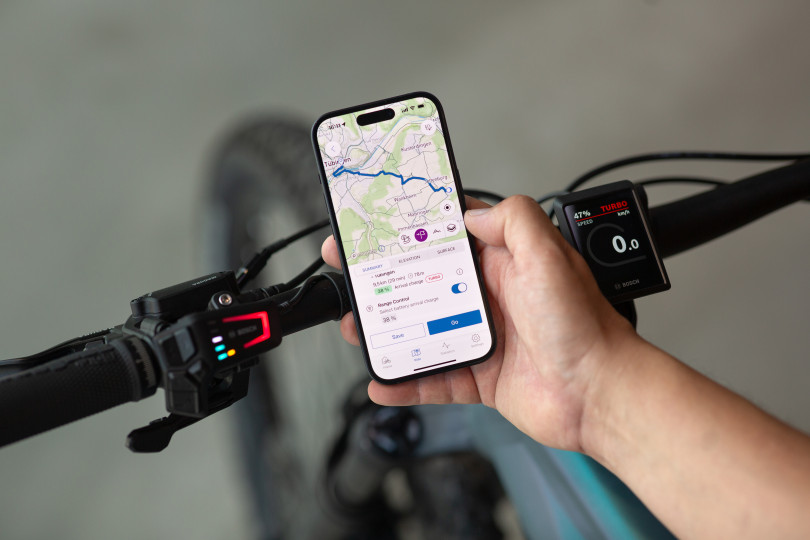
Although eBikes are becoming increasingly popular, many people are concerned that their batteries will run out too early and at the worst possible moment. Artificial intelligence can be a useful ally here as well, as it helps to dispel unnecessary concerns about range. With Bosch's AI-based Range Control function, eBike users can set the battery charge level they want to arrive at their destination with before setting off, using the provided app. Artificial intelligence then automatically adjusts the electric assistance during the ride, taking into account factors such as the system weight (i.e. the total weight of the bike, rider, and equipment), the incline of the road, or the personal riding style of the cyclist.
In search of inner secrets: intelligent wall scanner detects hidden objects
The older the building, the more secrets and technical challenges its walls conceal. These are often invisible from the outside and are not properly documented. Bosch's AI-supported wall scanner combines multiple sensor technologies with AI-based object recognition. With this new solution, the identification of various materials and objects inside walls, such as pipes, electrical cables, beams or even hollow spaces, becomes easier and more reliable. As a result of this innovation, radar signals are processed by increasingly sophisticated AI algorithms and neural networks, making the work of professionals safer and more accurate.
Deep-learning production lines: safety, precision and reliability in the battery industry
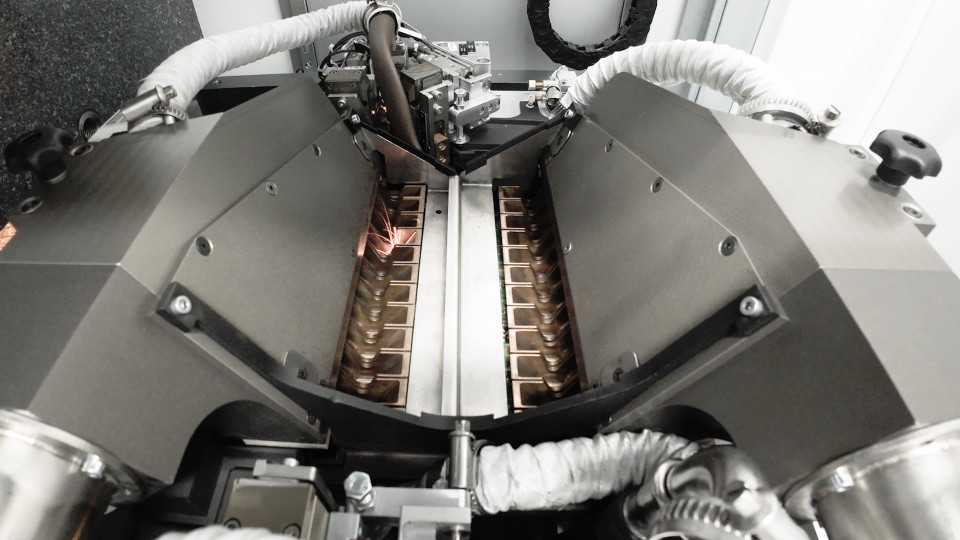
In the rapidly developing battery industry, manufacturing precision is key to the performance and reliability of battery modules and packs. These systems consist of multiple cells that are connected by laser welding, therefore even minor deviations can reduce the efficiency and safety of the entire battery. Bosch's innovative AI-based industrial solution offers automated optical measurement, real-time data processing, and optically controlled continuous laser welding with unprecedented speed and precision. The innovative technology, which also uses deep learning models, not only enables an efficient and high-quality production process, but also improves the long-term reliability and safety of battery packs, meeting the growing expectations of the electric vehicle production, the renewable energy industry and the consumers.
Mónika Hack
+36 70 510 5516
Bosch has been present in Hungary since 1898 with its products. After its re-establishment as a regional trading company in 1991, Bosch has grown into one of Hungary’s largest foreign industrial employers with currently nine subsidiaries. In fiscal 2024 it had total net sales of 2058 billion forints and consolidated sales to third parties on the Hungarian market of 313 billion forints. The Bosch Group in Hungary employs more than 17,400 associates (as of December 31, 2024). In addition to its manufacturing, commercial and development business, Bosch has a network of sales and service operations that covers the entire country.
The Bosch Group is a leading global supplier of technology and services. It employs roughly 418,000 associates worldwide (as of December 31, 2024). The company generated sales of 90.3 billion euros in 2024. Its operations are divided into four business sectors: Mobility, Industrial Technology, Consumer Goods, and Energy and Building Technology. With its business activities, the company aims to use technology to help shape universal trends such as automation, electrification, digitalization, connectivity, and an orientation to sustainability. In this context, Bosch’s broad diversification across regions and industries strengthens its innovativeness and robustness. Bosch uses its proven expertise in sensor technology, software, and services to offer customers cross-domain solutions from a single source. It also applies its expertise in connectivity and artificial intelligence in order to develop and manufacture user-friendly, sustainable products. With technology that is “Invented for life,” Bosch wants to help improve quality of life and conserve natural resources. The Bosch Group comprises Robert Bosch GmbH and its roughly 490 subsidiary and regional companies in over 60 countries. Including sales and service partners, Bosch’s global manufacturing, engineering, and sales network covers nearly every country in the world. Bosch’s innovative strength is key to the company’s further development. At 136 locations across the globe, Bosch employs some 87,000 associates in research and development
Additional information is available online at www.bosch.hu, iot.boschblog.hu, www.bosch.com, www.iot.bosch.com, www.bosch-press.com, www.twitter.com/BoschPresse