

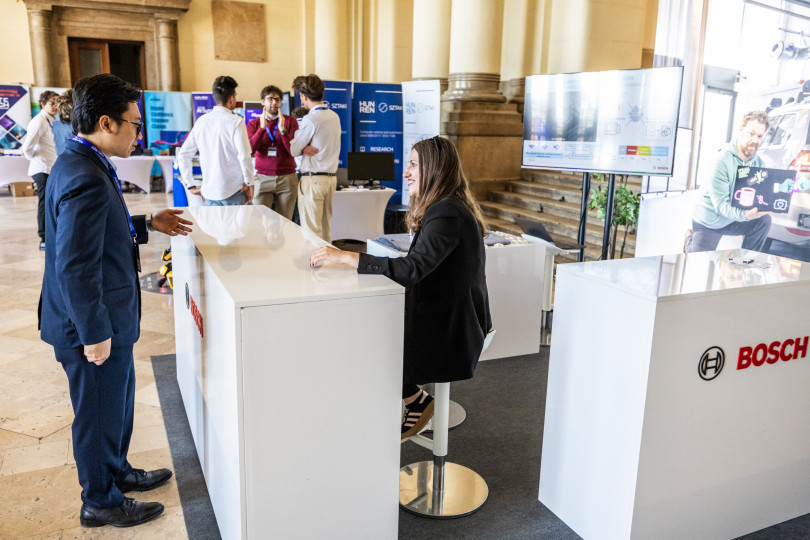
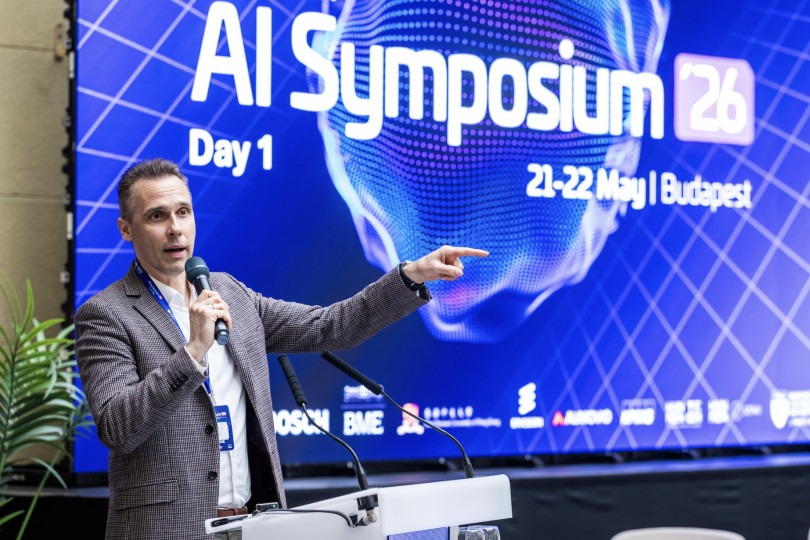
Artificial intelligence (AI) has brought significant changes to our lives in recent years, and it is now present in many areas of everyday life. The global automotive industry has also entered the era of artificial intelligence: although we humans still sit behind the wheel today, the basic operation of cars and the safety of passengers and traffic are increasingly determined by AI-based sensors, software and algorithms. As a key player in the innovation sector, Bosch offered a glimpse into its latest AI-based developments in the fields of autonomous vehicles and industrial automation at the international AI Symposium 2026 event organized in Budapest on May 21–22.





From possibility to reality: artificial intelligence could bring vehicles capable of making their own decisions
In the automotive industry, AI can create real value when it evolves from a theoretical vision into a reliable product feature suitable for mass production, becoming an integral part of future mobility solutions. The advanced driver-assistance systems (ADAS) from Bosch enable vehicles to see, sense, and accurately interpret information about their surroundings, recognize traffic situations, make decisions, and react in real time on the road. “Machine vision, situational awareness and spatial orientation are no longer just basic research topics. At Bosch, we have been working for a long time to offer practical, effective and safe solutions for mobility and industry with the help of AI-based technologies. Bosch has filed more than 2,000 AI patents internationally to date, and we plan to invest more than 2.5 billion euros globally in artificial intelligence by 2027,” said Dr. István Szászi, representative of the Bosch Group in Hungary and the Adriatic region, at the AI Symposium.
The car sees everything: AI-based safety in the passenger compartment
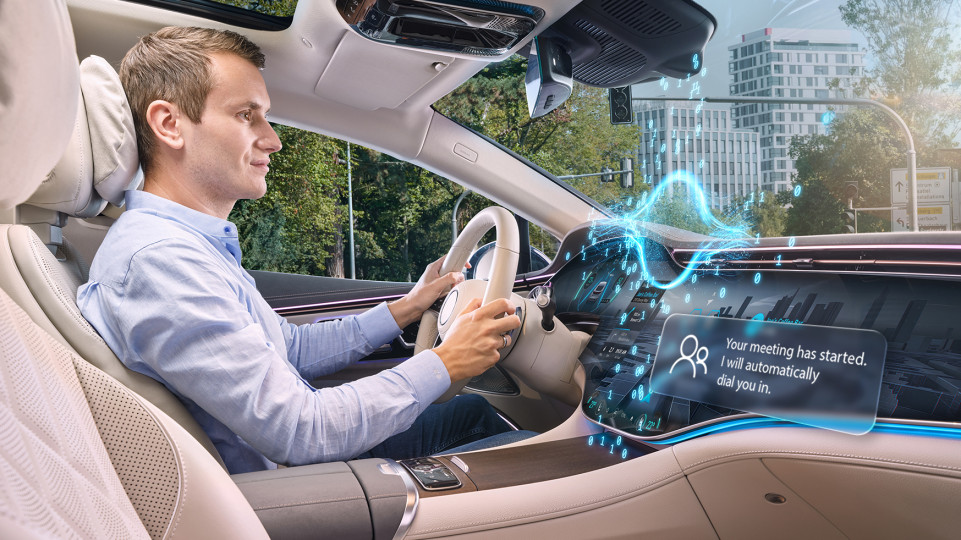
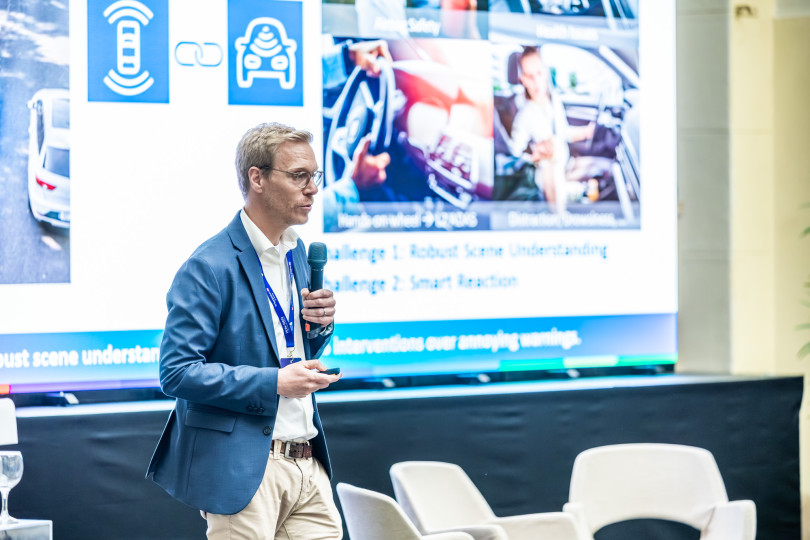
According to international research, one in ten traffic accidents is caused by drivers becoming exhausted, drowsy, or distracted while driving. As a result, the EU’s General Safety Regulation (GSR) has required the use of driver fatigue monitoring systems in new cars since 2024, and from July 2026, mandatory systems will also ensure that drivers are not distracted while driving. The AI-based passenger compartment safety developments at Bosch offer a wide range of solutions for all of this – and go even further. “Safety is no longer just about the external environment of the vehicle. What happens inside the passenger compartment is also becoming increasingly important. Due to new safety regulations, NCAP ratings and rising consumer expectations, interior sensing technology is advancing very quickly, providing passengers with an increasingly intelligent protective shield inside the car. At the same time, AI-based automotive innovations go beyond safety: they pave the way for further advancements in automated driving,” said Dr. Oliver Lange, head of the interior sensing division at Bosch Research, in his presentation at the AI Symposium in Budapest.
AI takes immediate action in a health emergency
Bosch is working on a number of key AI-based innovative solutions in interior sensing for cars. These complex systems monitor the driver and the entire passenger compartment. The data collected by interior cameras and radars provides real-time information to the vehicle’s AI-based safety systems, which issue warnings, make adjustments, or intervene if necessary. While driving, a lapse in attention, a momentary distraction, or even a minor bout of illness can lead to fatal consequences, therefore monitoring vital signs is a top priority in interior sensing, primarily based on heart rate and respiratory rate estimation. The purpose is to detect health issues even before the driver becomes unable to act, allowing the system to alert the driver in time or even bring the vehicle to a safe stop in a critical situation.
It doesn't go unnoticed: the intelligent system protects passengers and children as well
The passenger compartment monitoring functions, supported by artificial intelligence, radar and multiple cameras, pay attention to almost everything that may be important in terms of safety. For example, the 3D posture sensor monitors whether anyone in the car is in a posture that could result in injury in the event of an unexpected incident. This includes situations where a passenger places their feet on the dashboard or their head gets too close to the airbag, which poses an increased risk of injury. By estimating the height and weight of the passengers, the system can also optimize airbag deployment, and it constantly monitors whether the driver is keeping their hands on the steering wheel. With the help of sophisticated sensors, the AI can even detect the presence of children who may have been left behind in the vehicle – a presence barely noticeable from the outside – and thus saving lives.
AI is being integrated into both products and manufacturing at Bosch
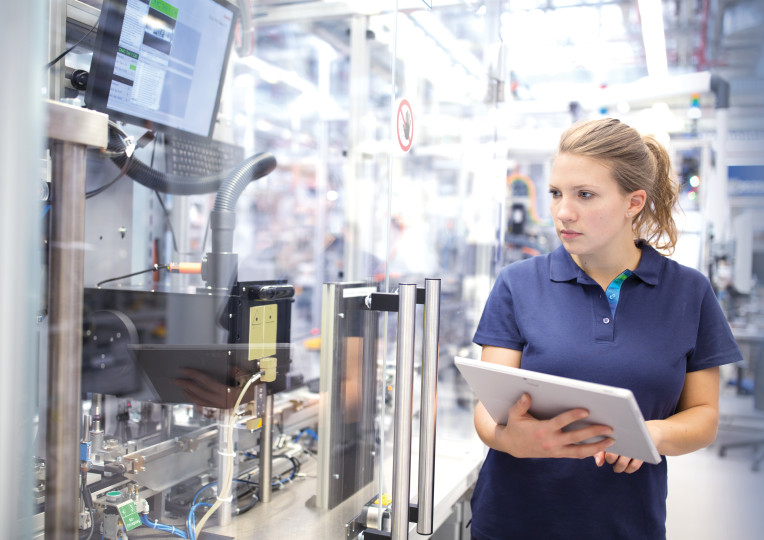
Reliable industrial products can only be achieved if the entire design and manufacturing process is executed with maximum precision and efficiency. Bosch relies on artificial intelligence not only in the operation of its innovative products but also in their production. The company uses AI-based methods in nearly every phase of manufacturing to improve the final quality of its products. The company’s experts presented specific examples of these solutions at AI Symposium 2026.
Artificial intelligence and machine learning-based solutions play a key role in the development of Bosch's complex automotive MEMS sensors, as well as in the automated quality control of soldering used in the production of industrial products. AI can also provide solutions to eliminate “mysterious” phenomena such as disruptive and undesirable rattles, vibrations and friction occurring in certain vehicle components (for example in airbag electronics). By identifying hidden causes through AI-based analysis, potential issues can be eliminated before mass production begins.
The joint GraphRAG technology of Bosch and HUN-REN SZTAKI (Institute for Computer Science and Control) also uses artificial intelligence to increase the efficiency of development and manufacturing. It functions as an AI-based company-wide knowledge center that can be used in all areas of Bosch, including research and development, engineering and quality management. The model is able to find precise answers within vast amounts of unstructured data, such as PDFs and reports, thereby accelerating troubleshooting for engineers and researchers, and making it easier for new employees to get involved in ongoing projects and developments.
Mónika Hack
+36 70 510 5516
Bosch has been present in Hungary since 1898 with its products. After its re-establishment as a regional trading company in 1991, Bosch has grown into one of Hungary’s largest foreign industrial employers with currently ten subsidiaries. In fiscal 2025 it had total net sales of 1.926 billion forints and consolidated sales to third parties on the Hungarian market of 303 billion forints. The Bosch Group in Hungary employs around 16,800 associates (as of December 31, 2025). In addition to its manufacturing, commercial and development business, Bosch has a network of sales and service operations that covers the entire country.
The Bosch Group is a leading global supplier of technology and services. It employs roughly 413,000 associates worldwide (as of December 31, 2025). The company generated
sales of 91 billion euros in 2025. Its operations are divided into four business sectors: Mobility, Industrial Technology, Consumer Goods, and Energy and Building Technology. With its business activities, the company aims to use technology to help shape universal trends such as automation, digitalization, electrification, and artificial intelligence. In this context, Bosch’s broad diversification across regions and industries strengthens its innovativeness and robustness. Bosch uses its proven expertise in hardware, software, and services to offer customers cross-domain solutions from a single source. It also applies its expertise in connectivity and artificial intelligence in order to develop and manufacture intelligent, user-friendly, and sustainable products. With technology that is “Invented for life,” Bosch wants to help improve quality of life and conserve natural resources. The Bosch Group comprises Robert Bosch GmbH and its roughly 500 subsidiary and regional companies in over 60 countries. Including sales and service partners, Bosch’s global manufacturing, engineering, and sales network covers nearly every country in the world. Bosch’s innovative strength is key to the company’s further development. Bosch employs some 82,000 associates in research and development.
Additional information is available online at www.bosch.hu, iot.boschblog.hu, www.bosch.com, www.iot.bosch.com, www.bosch-press.com, www.twitter.com/BoschPresse