
Today's teenagers have a difficult time deciding their future. Robotics, digitalization and artificial intelligence (AI) are advancing at a staggering pace. Innovation is not only transforming everyday life, but it is having a huge impact on the job market as well. New professions are emerging, new skills are becoming essential, yet young people still do not always understand how these future-defining technologies work, even though they use them on a daily basis.
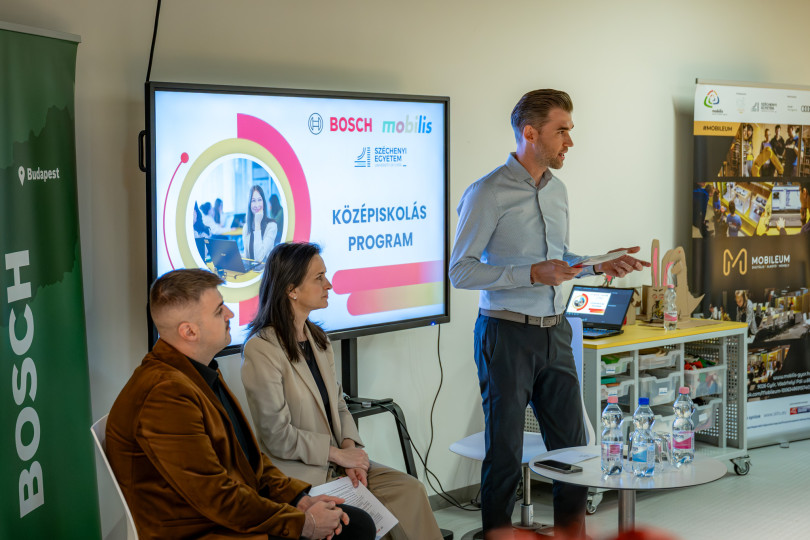


Students gained practical knowledge and a sense of success
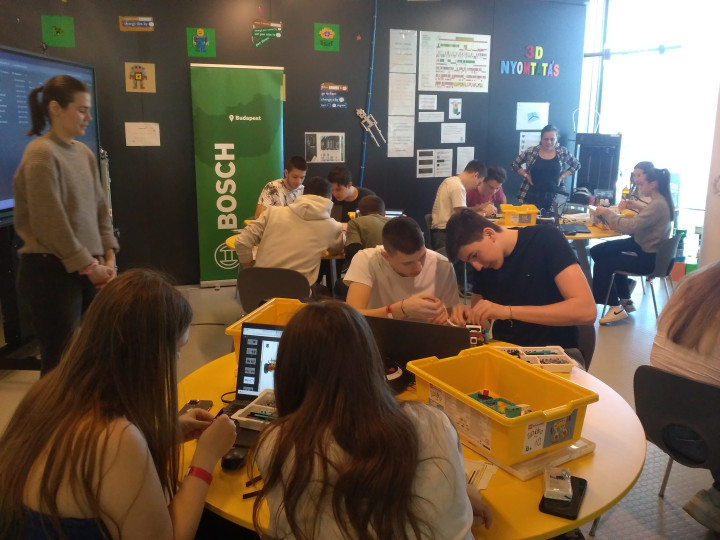
Organized in collaboration between the Bosch Group in Hungary, the Mobilis Interactive Experience Center in Győr and Széchenyi István University, the program series brought future scientific innovations to high school students through real-world issues. The activities were based on experiential learning, allowing students to discover the ever-changing world of robotics, sensors, programming and artificial intelligence by solving creative tasks.
The goal of the Bosch-Mobilis high school program, now held for the second time, was to develop young people’s digital skills, competencies and knowledge, supporting them in their further education and future career development. A total of 43 high school classes with more than 1,100 students from the counties of Győr-Moson-Sopron, Vas, Komárom-Esztergom and Veszprém participated in the program series, which ran from October 2025 to April 2026. The program not only provided inspiration and practical knowledge to the high school students, but also strengthened teamwork, creative problem-solving and critical thinking skills. Teachers of the students were also welcome to participate in the program’s closing event, specifically designed for educators, to experience the effectiveness of the methodology firsthand.
High school students developed a self-driving LEGO car, a robotic vacuum cleaner and an AI-based program
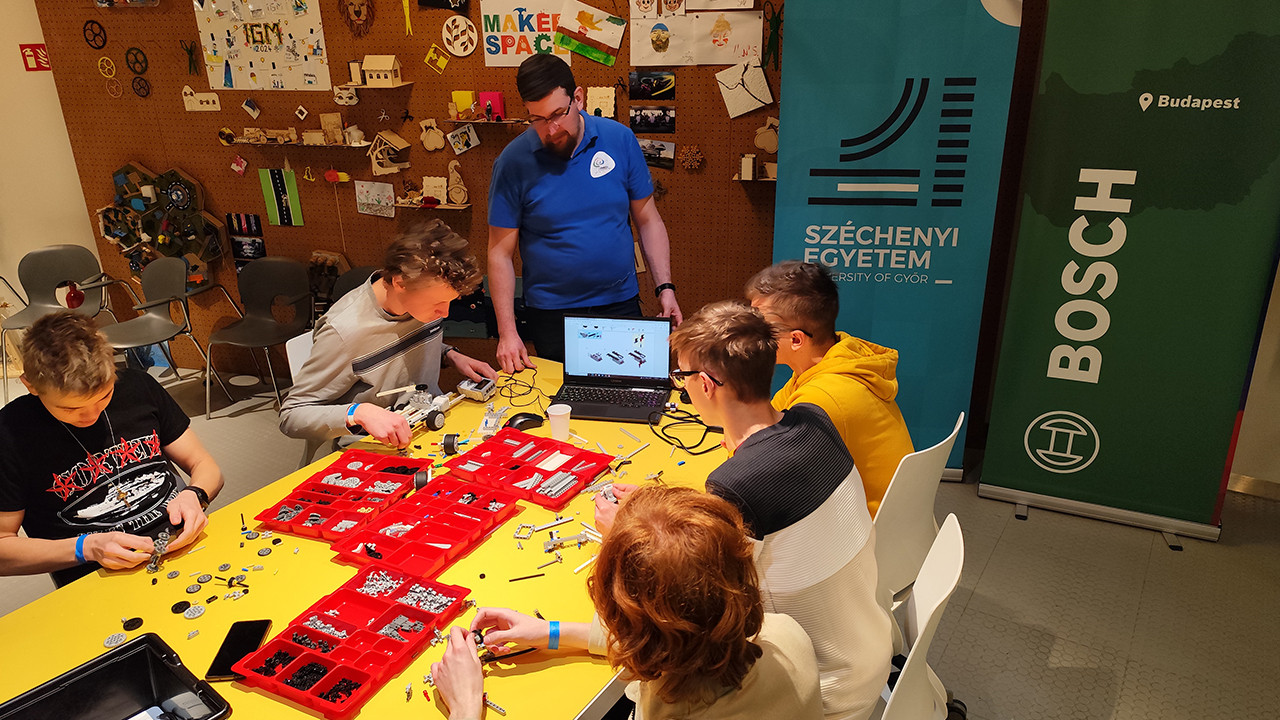
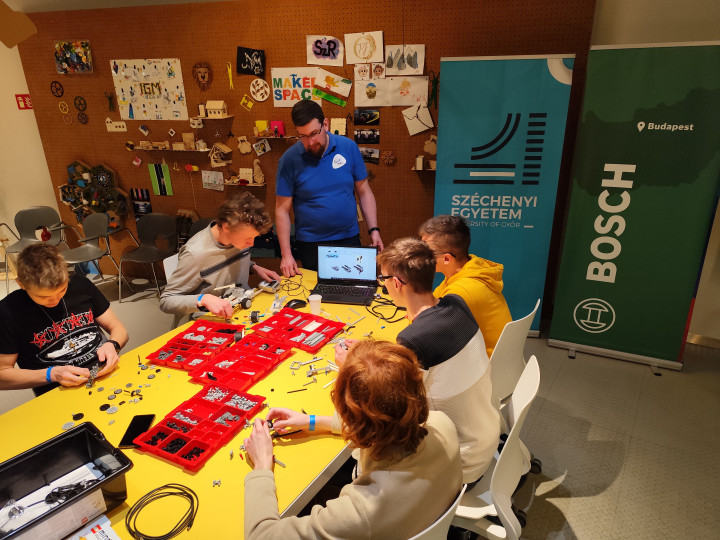
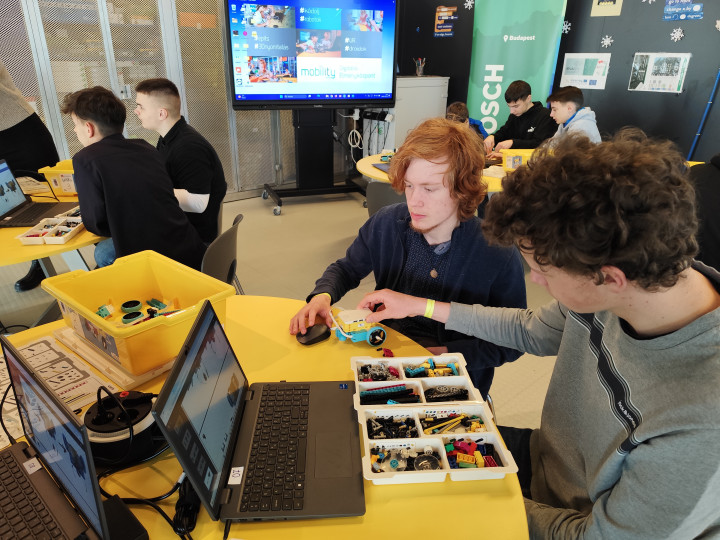
During the career orientation program, among other things, students learned the basics of robot building and programming: they “smartened” cars built from LEGO bricks with various sensors and codes to enable them to transport small loads and maneuver on test tracks. They also built a robotic vacuum cleaner of their own design using recycled materials and 3D-printed parts. Then, by installing sensors, they programmed the device to automate its operation – and put it to work right away on the spot as well. However, the students were most excited by the AI “special session,” where they learned the secrets of effective prompting: they not only chatted with the AI, but also used the system to design logos and create a system that recognizes hand gestures, emotions and errors, while gaining insight into machine learning and neural networks as well.
The Bosch-Mobilis high school program prepared students for the professions of the future
The Bosch Group in Hungary has long placed a strong emphasis on the education of younger generations and supporting their professional development. An important part of the group’s strategy is to contribute to the development of the Hungarian culture of innovation by collaborating with high schools and higher education institutions and to provide insight into the exciting opportunities available in technology and science careers. „As a leading technology company, we are constantly searching for answers to the challenges of the future. We believe that the professions of tomorrow require not only up-to-date knowledge, but openness, curiosity and practical experience as well. We would like to support young people in better understanding the changes taking place around them and in being more confident and prepared to make decisions about their future” – said Mátyás Pótsa, director of Innovation Ecosystem at Bosch Hungary, at the closing event of the Bosch-Mobilis high school program.
Bernadett Keszthelyi, CEO of Mobilis, emphasized regarding the collaboration: “The current generation of high school students will need entirely different skills and abilities in the job market than what the traditional education system prepares them for. Digital literacy and a technological focus will be essential in any job, not just in technical and engineering fields. Students will need to have new skills such as critical thinking, creative problem solving, project-centric thinking and collaboration, which from now on will not only be realized between people, but in many cases will also mean cooperation between AI and humans. We must prepare for this in a targeted manner: we need to teach young people how to use this exponentially growing technology in a conscious and critical manner, as today's students will most likely have to compete with more than just their fellow human peers in the future job market. Mobilis believes that this change in mindset must be embraced early, and we are delighted to have the opportunity to do so in collaboration with global companies like Bosch, who themselves consider innovative educational projects to be important and see value in this program.”
Zita Hella Varga
Phone: +36 70 667-6374
Bosch has been present in Hungary since 1898 with its products. After its re-establishment as a regional trading company in 1991, Bosch has grown into one of Hungary’s largest foreign industrial employers with currently nine subsidiaries. In fiscal 2024 it had total net sales of 2058 billion forints and consolidated sales to third parties on the Hungarian market of 313 billion forints. The Bosch Group in Hungary employs more than 17,400 associates (as of December 31, 2024). Figures of fiscal 2025 of the Bosch Group in Hungary will be published on May 7, 2026. In addition to its manufacturing, commercial and development business, Bosch has a network of sales and service operations that covers the entire country.
The Bosch Group is a leading global supplier of technology and services. It employs roughly 413,000 associates worldwide (as of December 31, 2025). The company generated
sales of 91 billion euros in 2025. Its operations are divided into four business sectors: Mobility, Industrial Technology, Consumer Goods, and Energy and Building Technology. With its business activities, the company aims to use technology to help shape universal trends such as automation, digitalization, electrification, and artificial intelligence. In this context, Bosch’s broad diversification across regions and industries strengthens its innovativeness and robustness. Bosch uses its proven expertise in hardware, software, and services to offer customers cross-domain solutions from a single source. It also applies its expertise in connectivity and artificial intelligence in order to develop and manufacture intelligent, user-friendly, and sustainable products. With technology that is “Invented for life,” Bosch wants to help improve quality of life and conserve natural resources. The Bosch Group comprises Robert Bosch GmbH and its roughly 500 subsidiary and regional companies in over 60 countries. Including sales and service partners, Bosch’s global manufacturing, engineering, and sales network covers nearly every country in the world. Bosch’s innovative strength is key to the company’s further development. Bosch employs some 82,000 associates in research and development.
The company was set up in Stuttgart in 1886 by Robert Bosch (1861-1942) as “Workshop for Precision Mechanics and Electrical Engineering.” The special ownership structure of Robert Bosch GmbH guarantees the entrepreneurial freedom of the Bosch Group, making it possible for the company to plan over the long term and to undertake significant upfront investments in the safeguarding of its future. Ninety-four percent of the share capital of Robert Bosch GmbH is held by Robert Bosch Stiftung GmbH, a limited liability company with a charitable purpose. The remaining shares are held by Robert Bosch GmbH and by a company owned by the Bosch family. The majority of voting rights are held by Robert Bosch Industrietreuhand KG. It is entrusted with the task of safeguarding the company’s long-term existence and in particular its financial independence – in line with the mission handed down in the will of the company’s founder, Robert Bosch.
Additional information is available online at www.bosch.hu, iot.boschblog.hu, www.bosch.com, www.iot.bosch.com, www.bosch-press.com, www.twitter.com/BoschPresse