
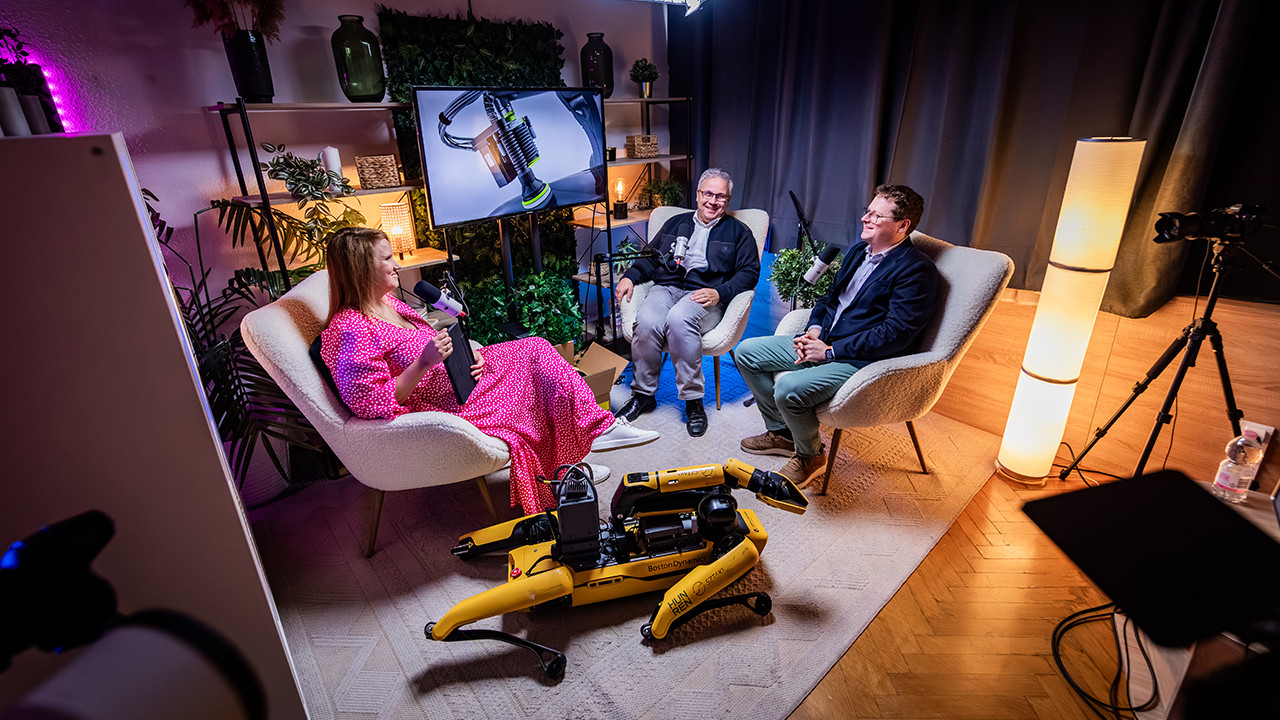
Budapest, 2026. 03. 16. – Working with robots may have seemed like science fiction for a long time, but today it’s becoming quite commonplace in more and more workplaces. But what are these systems actually capable of, and what is it that they cannot replace? What exactly makes a robot a robot, and not just an automated machine? These are just some of the topics that experts in the field discussed in the latest episode of the Bosch Hungary Podcast.
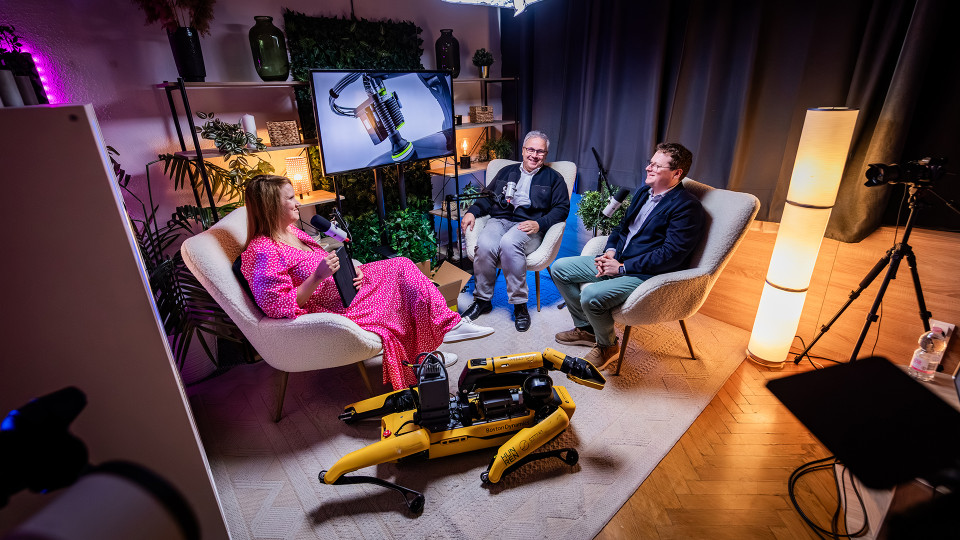
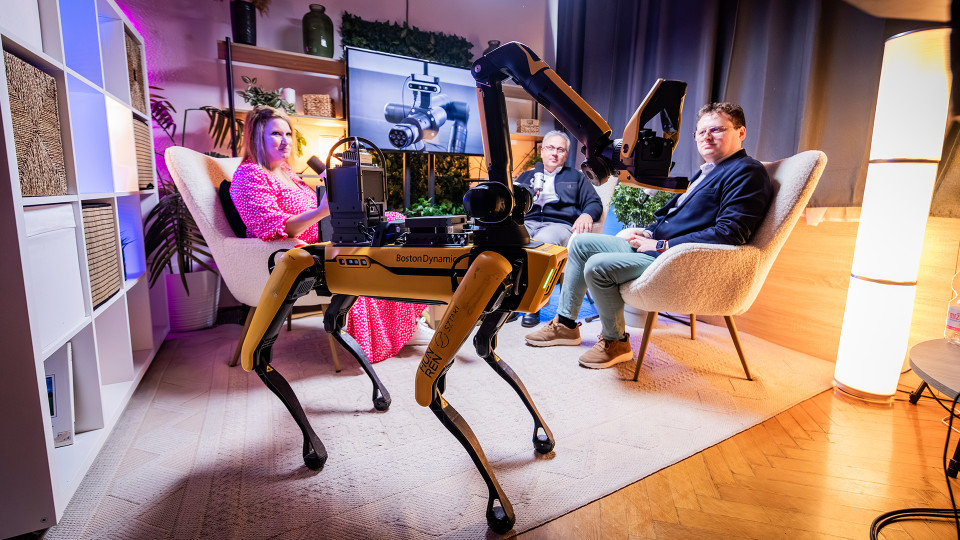
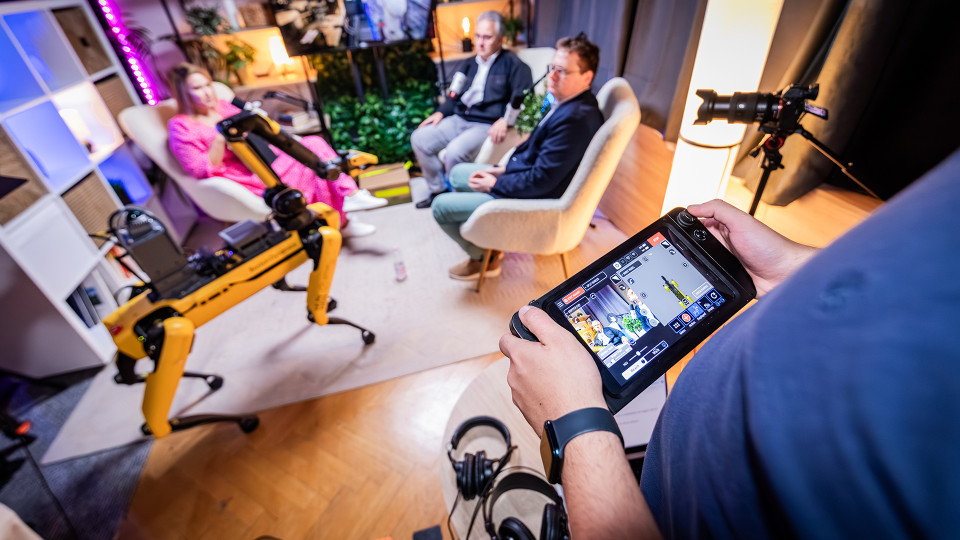
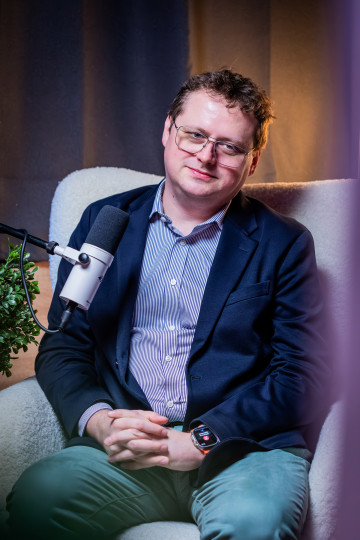
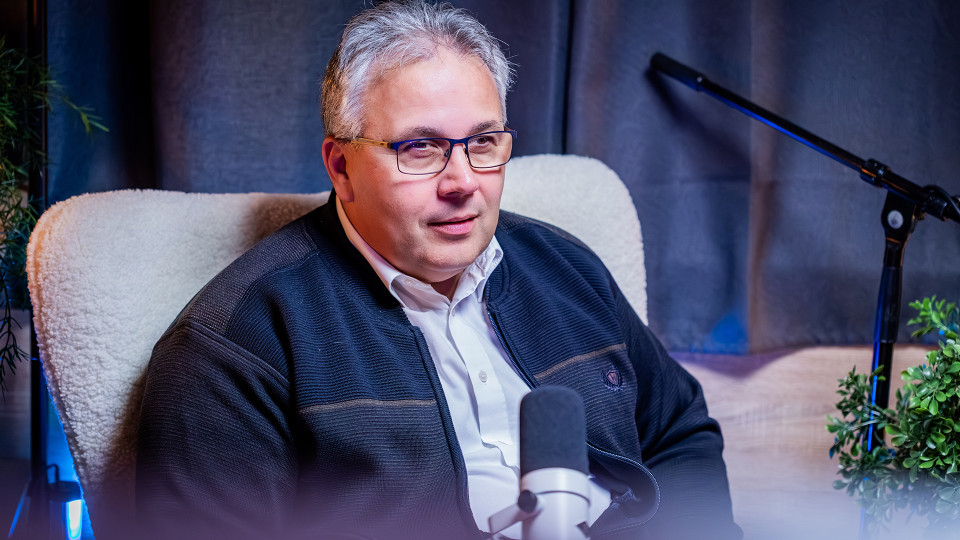
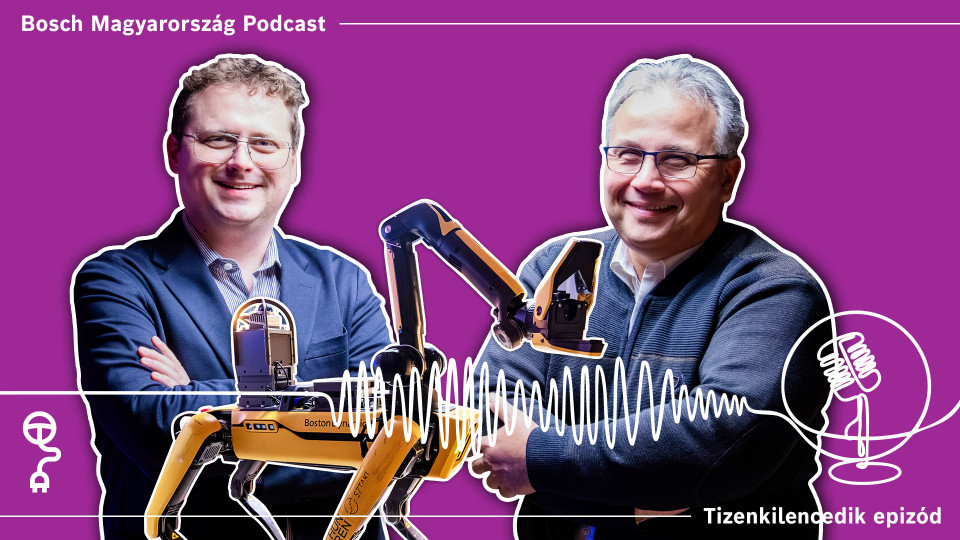





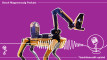

The guests on the podcast were András László Majdik, senior research fellow at the HUN-REN SZTAKI Machine Perception Research Laboratory and head of the robot localization group, Gábor Kis, enterprise resource planning (ERP) expert at Robert Bosch Elektronika Kft. The experts agreed that in the short term, we tend to overestimate the progress of robotics, but in the long term, we actually underestimate its impact on our lives.
Robotics is when a machine becomes capable of making decisions
One of the key questions raised in the podcast was where the line is drawn between an automated system and a true robot. While an automated system carries out a predetermined sequence of steps, a robot is capable of making independent decisions based on information from its environment and responding to unexpected situations. Therefore, the difference lies not in their appearance, but in their ability to make decisions and adapt.
András László Majdik highlighted that the development of modern robotics is driven by a combination of several technologies. Machine perception, artificial intelligence, and reinforcement learning, which has seen particularly rapid development in recent years, together enable robots to move, maintain balance, and react in increasingly natural ways – even in complex situations that are not pre-programmed.
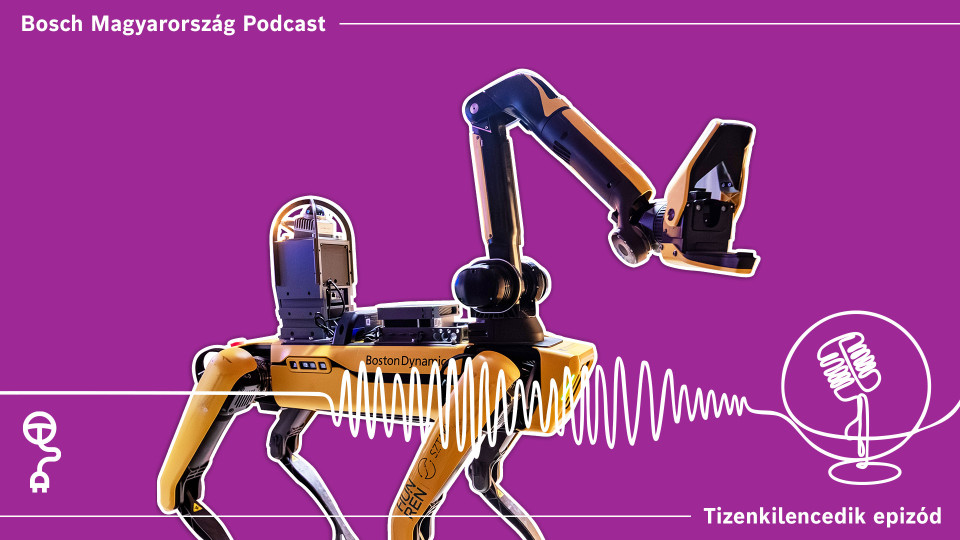
The expert from HUN-REN-SZTAKI also demonstrated a four-legged robot in the studio, which uses sensors to perceive its environment, moves stably, and is currently undergoing development to expand its autonomous capabilities. He emphasized that before anyone thinks about military applications, the manufacturer expressly prohibits such use, as the robot is intended solely for peaceful, everyday tasks.
It helps where work is monotonous or demanding
An important point that was raised in the podcast is that robotics is by no means a solution for every task. It works most effectively in work processes that can be easily structured, are physically demanding, or are too monotonous for humans. A typical example of this is materials handling within a plant. “When automated logistics solutions were launched at the Robert Bosch Elektronika Kft. plant in 2017, it turned out that an employee might have to walk up to 20 kilometers a day between the warehouse and the production area,” said the Bosch enterprise resource planning (ERP) expert. Today, automated guided vehicles (AGVs) not only cover long distances, but are also capable of navigating autonomously and communicating with one another, while safely avoiding obstacles.
The experts also discussed the importance of another area of development: the use of intelligent unpacking and sorting machines. These machines use artificial intelligence to recognize different types of packaging and components and then lift them out using the appropriate gripper attachments and the necessary force.
It is closer than we think
The development of humanoid, bipedal robots is underway worldwide. Just as personal computers became accessible to everyone within a few decades, robots may also become increasingly common and widespread. During the discussion, it was pointed out that almost everyone has a computer in their pocket nowadays, and over the next decade or two, the presence of robots could expand significantly in industry, services, and even in our daily lives. However, robots do not replace us, but rather complement us, as they cannot replace creativity, responsible decision-making, and human situational awareness.
The future is being built as an ecosystem
Experts have also pointed out that, due to the rapid advancement of technology, it is now increasingly important to think in terms of ecosystems. Collaboration between the industry, the academic sphere, and developer communities can speed up the process of turning research findings into solutions that can be applied in the industry.
Gábor Kis emphasized that Bosch collaborates with several Hungarian higher education institutions, such as the Faculty of Informatics at Eötvös Loránd University, the Budapest University of Technology and Economics, and Széchenyi István University. The goal of these collaborations is to ensure that the results achieved in research and development are put into practice as quickly as possible, while enabling students to gain experience working on real projects. The expert from HUN-REN-SZTAKI also confirmed that programming skills, knowledge of sensor technologies, image processing, and an understanding of the basics of systems theory and control theory are essential for the future of robotics.
Bosch Hungary Podcast: technology in plain language
The Bosch Hungary Podcast deals with the most current issues in innovation and R&D, seeks to provide clear answers to the most pressing questions about the technology of the future with the help of expert guests. If you are interested in learning more about how humanoid robots could become part of everyday life in the next ten or twenty years, you can listen to the answers and even watch them on the Bosch Hungary YouTube, Spotify, Apple Podcasts and Simplecast podcast channels.
Zita Hella Varga
Phone: +36 70 667-6374
Bosch has been present in Hungary since 1898 with its products. After its re-establishment as a regional trading company in 1991, Bosch has grown into one of Hungary’s largest foreign industrial employers with currently nine subsidiaries. In fiscal 2024 it had total net sales of 2058 billion forints and consolidated sales to third parties on the Hungarian market of 313 billion forints. The Bosch Group in Hungary employs more than 17,400 associates (as of December 31, 2024). In addition to its manufacturing, commercial and development business, Bosch has a network of sales and service operations that covers the entire country.
The Bosch Group is a leading global supplier of technology and services. According to preliminary figures, it employs roughly 412,000 associates worldwide (as of December 31, 2025). The company generated sales of 91 billion euros in 2025. Its operations are divided into four business sectors: Mobility, Industrial Technology, Consumer Goods, and Energy and Building Technology. With its business activities, the company aims to use technology to help shape universal trends such as automation, electrification, digitalization, connectivity, and an orientation to sustainability. In this context, Bosch’s broad diversification across regions and industries strengthens its innovativeness and robustness. Bosch uses its proven expertise in sensor technology, software, and services to offer customers cross-domain solutions from a single source. It also applies its expertise in connectivity and artificial intelligence in order to develop and manufacture user-friendly, sustainable products. With technology that is “Invented for life,” Bosch wants to help improve quality of life and conserve natural resources. The Bosch Group comprises Robert Bosch GmbH and its roughly 490 subsidiary and regional companies in over 60 countries. Including sales and service partners, Bosch’s global manufacturing, engineering, and sales network covers nearly every country in the world. Bosch’s innovative strength is key to the company’s further development. At 136 locations across the globe, Bosch employs some 82,000 associates in research and development.
The company was set up in Stuttgart in 1886 by Robert Bosch (1861–1942) as “Workshop for Precision Mechanics and Electrical Engineering.” The special ownership structure of Robert Bosch GmbH guarantees the entrepreneurial freedom of the Bosch Group, making it possible for the company to plan over the long term and to undertake significant upfront investments in the safeguarding of its future. Ninety-four percent of the share capital of Robert Bosch GmbH is held by Robert Bosch Stiftung GmbH, a limited liability company with a charitable purpose. The remaining shares are held by Robert Bosch GmbH and by a corporation owned by the Bosch family. The majority of voting rights are held by Robert Bosch Industrietreuhand KG. It is entrusted with the task of safeguarding the company’s long-term existence and in particular its financial independence – in line with the mission handed down in the will of the company’s founder, Robert Bosch.
Additional information is available online at www.bosch.hu, iot.boschblog.hu, www.bosch.com, www.iot.bosch.com, www.bosch-press.com, www.twitter.com/BoschPresse